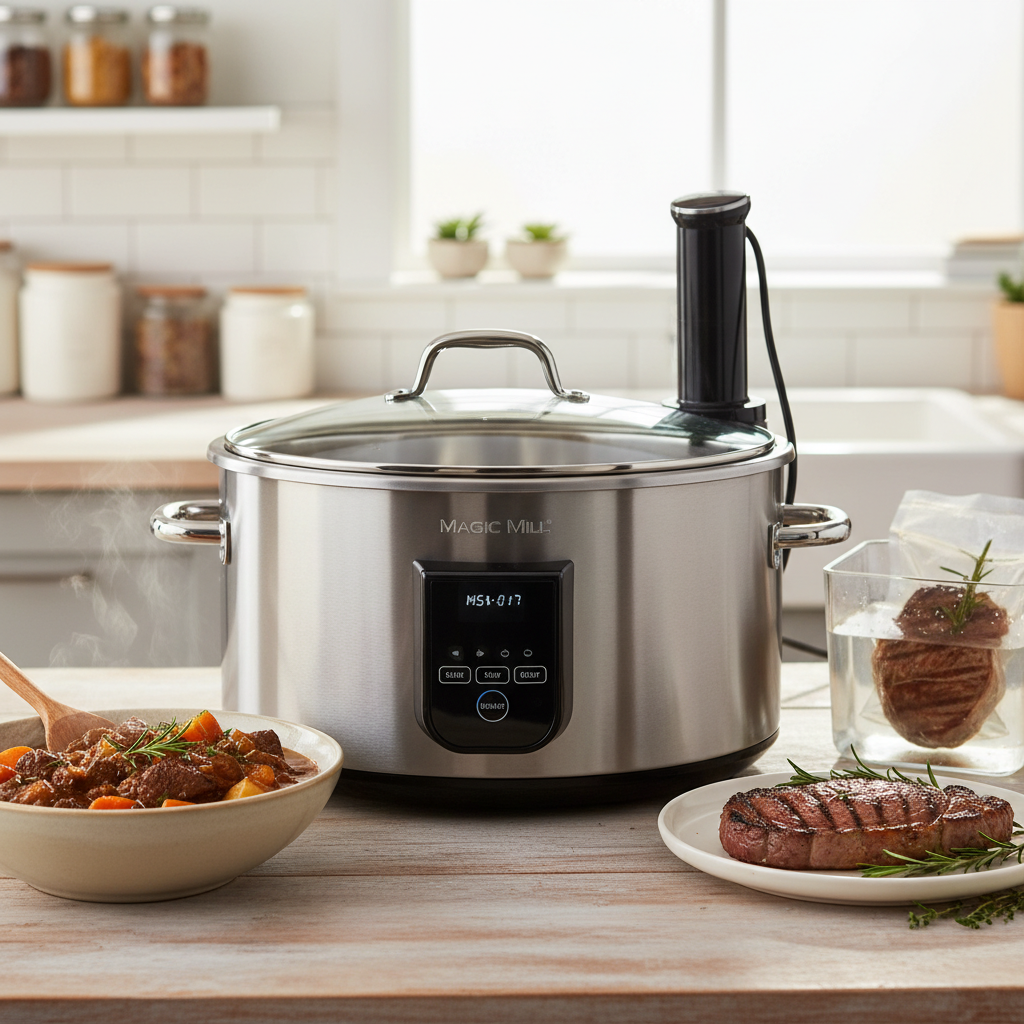
The humble slow cooker has long been a kitchen hero, transforming simple ingredients into comforting meals with minimal effort. For owners of manual slow cooker models, the desire to automate cooking times often leads to exploring external timer plugs. While these devices can offer a new level of convenience, especially for busy schedules, understanding their safe and effective use is paramount. This guide will walk you through how to integrate a timer plug with your manual slow cooker, emphasizing crucial food safety considerations and offering smarter alternatives to ensure your culinary creations are not only delicious but also perfectly safe.
Understanding Manual Slow Cookers and Timer Plugs
A manual slow cooker is characterized by its straightforward operation, typically featuring a simple dial or switch for “Off,” “Low,” “High,” and sometimes a “Warm” setting. Unlike their programmable counterparts, these models lack built-in timers, meaning they cook continuously until manually turned off. This simplicity is often appealing, but it limits the ability to precisely control cooking durations, especially when you’re away from home.
This is where a timer plug comes in. An external timer plug is a device that connects between your appliance’s plug and the wall outlet. It allows you to program specific “on” and “off” times for the connected appliance. When the timer activates, it supplies power, and when it deactivates, it cuts the power. For a manual slow cooker, this means if you set the cooker to “Low” before plugging it into the timer, it will resume cooking on “Low” when the timer supplies power.
The Critical Role of Food Safety When Using Timer Plugs
While the concept of automating a manual slow cooker sounds appealing, it introduces significant food safety challenges, particularly concerning delayed starts with perishable ingredients.
The primary concern revolves around the “danger zone” for bacterial growth, which is typically between 40°F and 140°F (4°C and 60°C). Harmful bacteria can multiply rapidly within this temperature range. When you use a timer plug to delay the start of cooking, ingredients like raw meat, poultry, dairy, and some vegetables can sit at room temperature for hours before the slow cooker begins to heat them. This prolonged exposure in the danger zone creates an environment ripe for bacterial proliferation, which cooking later may not fully eliminate. Some experts, including electricians, also express concerns about the continuous load a heating element like a slow cooker puts on a timer plug, which might not be designed for such sustained wattage.
Furthermore, unlike many programmable slow cookers that automatically switch to a “keep warm” setting after cooking, a manual slow cooker connected to a timer plug will simply power off when the timer expires. This means your cooked food can quickly cool down into the danger zone if you’re not there to transfer it to serving dishes or refrigerate it promptly. This “post-cooking risk” is as critical as the “delayed start risk.”
It is also crucial to never cook frozen meat in a slow cooker, especially with a delayed start. Frozen ingredients take a long time to reach safe cooking temperatures, and spending extended periods in the danger zone significantly increases the risk of foodborne illness.
“When it comes to delayed cooking with raw meats, the convenience isn’t worth the risk. Prioritizing food safety should always be the number one ingredient in your recipe.”
When and How to Use a Timer Plug with Caution
Given the significant safety concerns, using a timer plug with a manual slow cooker for a delayed start with raw, perishable ingredients is generally not recommended. The potential for bacterial growth outweighs the convenience.
However, if you choose to use a timer plug, it should be done with extreme caution and only for specific, low-risk scenarios.
Suitable, Lower-Risk Scenarios:
- Switching Off After Cooking: A safer application is to use the timer to turn off the slow cooker after a set cooking period, rather than delaying its start. This can prevent overcooking for recipes that don’t transition to a “keep warm” function. However, you must be present to address the food immediately after it turns off to prevent it from entering the danger zone.
- Non-Perishable Ingredients: Consider using it for dishes with only non-perishable ingredients, such as overnight oatmeal with only oats and water (adding milk/fruit fresh), or perhaps some dried bean recipes where the beans are thoroughly rinsed and water added just before starting, provided the ambient temperature is cool. Even then, caution is advised.
- Pre-Cooked Ingredients: If your recipe involves only fully pre-cooked ingredients that are assembled and then simply reheated, the risk is lower, but still be mindful of the time the food spends warming up and cooling down.
General Setup Steps (with heavy caveats):
- Verify Slow Cooker Type: Ensure your slow cooker is truly manual, with a simple dial or toggle switch for its settings. Digital models often reset when power is cut and restored, requiring a manual button press to restart, rendering an external timer ineffective for a delayed start.
- Select a Robust Timer: Choose a heavy-duty mechanical or digital timer designed for appliances, not just lights. Check its wattage rating to ensure it can safely handle your slow cooker’s power requirements.
- Plug in the Timer: Plug the timer directly into a grounded wall outlet. Avoid extension cords.
- Set Timer Program: Program the desired “ON” and “OFF” times. For a delayed start (again, proceed with extreme caution and only for low-risk ingredients), set the “ON” time for when you want cooking to commence. For an “OFF” timer, set it for when you want cooking to cease.
- Set Slow Cooker: Before plugging the slow cooker into the timer, set your manual slow cooker to the desired cooking setting (e.g., “Low” or “High”).
- Connect Slow Cooker: Plug your slow cooker into the timer plug.
- Add Ingredients (Critically Important): Add ingredients only if they are safe to sit at ambient temperature for the duration of the delay, or if the cooking process will start almost immediately. Never use this for raw meat, poultry, or dairy with a delayed start.
Types of Timer Plugs for Slow Cookers
When considering an external timer for any appliance, including a slow cooker, it’s important to know the types available:
- Mechanical Timers: These are often the simplest, featuring a dial with pins or segments that you push in or pull out to set “on” and “off” periods. They are generally robust and reliable for simple scheduling.
- Digital Timers: These offer more precision and often have multiple programmable settings for different days of the week. They typically have a small LCD screen and buttons for programming.
- Smart Plugs: These Wi-Fi enabled devices allow you to control power to an appliance remotely via a smartphone app. You can turn them on or off, or schedule times from anywhere with an internet connection. While they offer ultimate convenience, the same food safety warnings for delayed starts with perishable food apply. A smart plug cannot magically make raw meat safe after sitting out for hours.
When selecting any timer plug, always ensure it is rated to handle the electrical load of your slow cooker. Look for UL certification or similar safety standards.
Safer Alternatives for Automated Slow Cooking
Given the significant food safety risks associated with using external timer plugs for delayed starts with manual slow cookers and perishable foods, it is far safer and more convenient to consider alternatives:
- Invest in a Programmable Slow Cooker: This is the gold standard for automated slow cooking. Programmable models have built-in digital timers that allow you to set specific cooking durations. Crucially, most modern programmable slow cookers automatically switch to a “Keep Warm” setting after the cooking cycle is complete, holding your food at a safe temperature until you’re ready to eat (typically for up to 2-4 hours). This eliminates both the delayed start and post-cooking safety concerns.
- Choose Recipes with Longer Cook Times: Many slow cooker recipes are designed to cook for 8-10 hours or more on the “Low” setting. If you prepare these meals in the morning, they will be perfectly cooked by the time you return home in the evening, without needing a delayed start.
- Use Meal Prep Strategies: Prepare your ingredients the night before and store them in the slow cooker pot in the refrigerator. In the morning, simply take the pot out, place it in the slow cooker, plug it in, and turn it on manually. This avoids the unsafe “sitting out” period for raw ingredients.
- “Quick Prep” Recipes: Opt for recipes that require minimal morning preparation, allowing you to add ingredients and start the slow cooker just before you leave.
Conclusion
Using a timer plug with a manual slow cooker can seem like a clever hack for convenience, but it carries substantial food safety risks, particularly for delayed starts involving perishable ingredients. The “danger zone” for bacterial growth is a serious concern, and manual slow cookers lack the automatic “keep warm” functions that mitigate post-cooking hazards in programmable models. While technically possible to power on a manual slow cooker with an external timer, the wise choice is to prioritize health and safety.
For true peace of mind and enhanced convenience, investing in a programmable slow cooker with a built-in timer and automatic keep-warm function is highly recommended. These appliances are designed to handle timed cooking safely and effectively. If you choose to use an external timer, reserve it for very specific, low-risk scenarios, such as turning off a pre-started slow cooker, and always be meticulously vigilant about food handling practices. Your health, and the delicious outcome of your meals, depend on it.
Frequently Asked Questions
Can I use a smart plug with my manual slow cooker for a delayed start?
|
Our Picks for the Best Slow cooker in 2026
As an Amazon Associate I earn from qualifying purchases.
|
||
| Num | Product | Action |
|---|---|---|
| 1 | Crock-Pot 7-Quart Manual Slow Cooker, Family Size Serves 8+ People or Fits 6-lb Roast, Removable Stoneware with Warming Setting, Dishwasher Safe for Easy Cleanup, Charcoal |

|
| 2 | Ninja® 12-in-1 PossibleCooker™ PLUS | 8.5-qt - Sous Vide & Proof Multi-Cooker | Slow Cooker, Dutch Oven & More | Glass Lid & Integrated Spoon | Nonstick | Oven Safe Pot to 500°F | Black | MC1010 |
|
| 3 | Sweetcrispy 16-in-1 Electric Pressure Cooker 6QT, 12-Preset Multi Cookers with Ceramic Pot, Slow Cook Rice Steamer Sauté Soup Yogurt Maker and More, Recipe Book |
|
| 4 | Hamilton Beach 6-Quart Slow Cooker with 3 Cooking Settings, Dishwasher-Safe Stoneware Crock & Glass Lid, Silver (33665G) |
|
| 5 | Crock-Pot 6 Quart Cook & Carry Programmable Slow Cooker with Digital Timer Stainless Steel (CPSCVC60LL-S) pack of 1 |
|
| 6 | Crock-Pot Large 8-Quart Programmable Slow Cooker with Auto Warm Setting Black Stainless Steel |
|
| 7 | Instant Pot Duo 7-in-1 Electric Pressure Cooker, Slow Cooker, Rice, Steamer, Sauté, Yogurt Maker, Warmer & Sterilizer, Includes App With Over 800 Recipes, Stainless Steel, 6 Quart |
|
| 8 | Crock-pot Express Crock Slow Cooker 8 quart Red |
|
| 9 | Crock-Pot 7 Quart Oval Manual Slow Cooker, Stainless Steel (SCV700-S-BR), Versatile Cookware for Large Families or Entertaining |
|
| 10 | Hamilton Beach Slow Cooker, Extra Large 10 Quart, Stay or Go Portable With Lid Lock, Dishwasher Safe Crock, Black (33195) |
|
While you can technically connect a manual slow cooker to a smart plug for remote control or scheduled power, the fundamental food safety issues remain. A smart plug cannot prevent raw ingredients from sitting at unsafe temperatures (the “danger zone”) before cooking, making it risky for dishes containing meat, poultry, or dairy.
What is the “danger zone” for food safety in slow cooking?
The “danger zone” for bacterial growth is between 40°F and 140°F (4°C and 60°C). Food should not remain in this temperature range for more than two hours accumulated time to prevent the rapid multiplication of harmful bacteria that can cause foodborne illness.
Is it safe to put frozen meat in a slow cooker, especially with a timer?
No, it is generally unsafe to put frozen meat directly into a slow cooker, particularly if using a delayed start. Frozen meat takes too long to reach a safe cooking temperature, spending an extended period in the bacterial “danger zone,” even without a timer delay. Always thaw meat completely before slow cooking.
How long can cooked food safely stay on a “keep warm” setting?
Most manufacturers and food safety guidelines recommend that cooked food should not be held on a “keep warm” setting for more than 2-4 hours. After this time, the quality of the food can deteriorate, and there’s an increased risk of it dropping into the danger zone if the “warm” setting isn’t sufficiently hot.