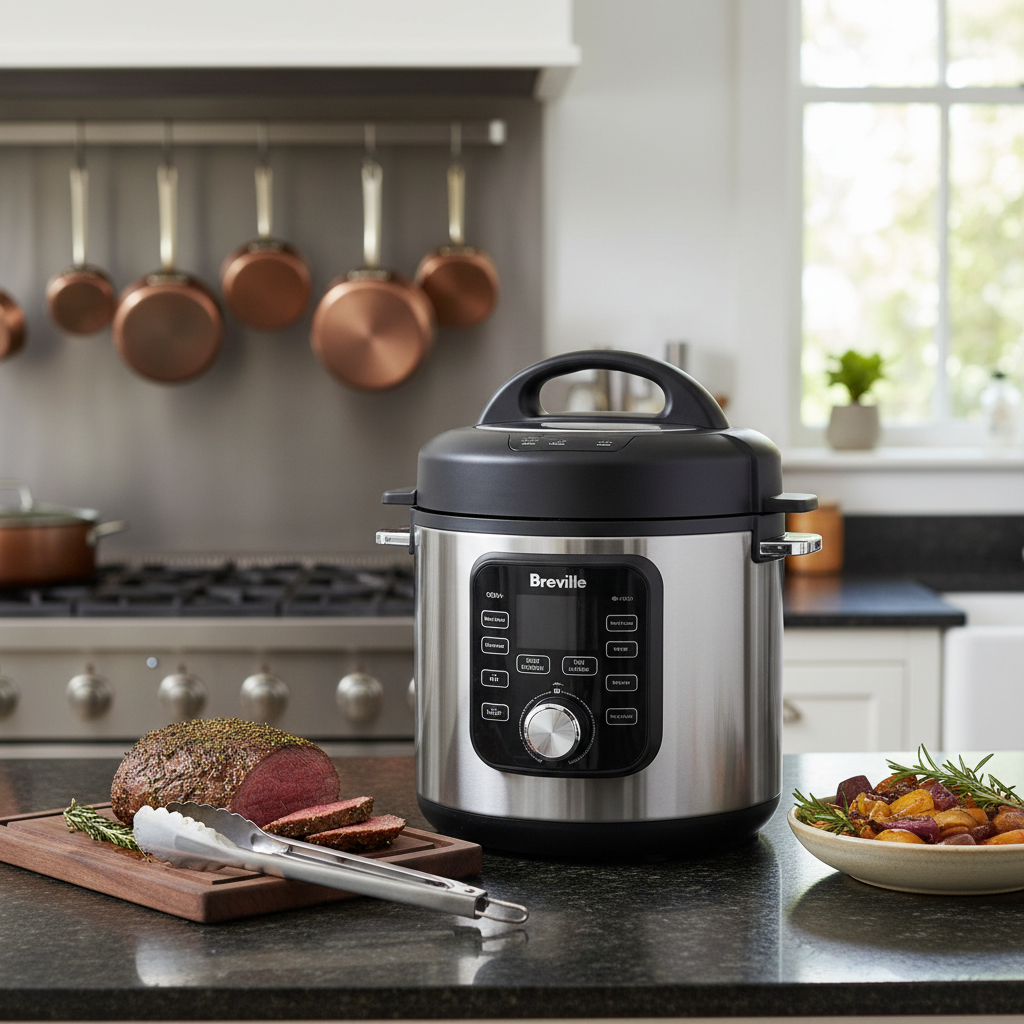
Imagine a kitchen where every meal is a masterpiece of convenience and flavor, where your slow cooker isn’t just a set-it-and-forget-it appliance, but a smart, efficient partner in culinary creation. We stand at the precipice of a cooking revolution, and at its heart lies the integration of induction technology with the beloved slow cooker. This powerful synergy promises not only to elevate your cooking experience but also to redefine efficiency and precision in your kitchen.
Understanding the Essence of Slow Cooking and Induction
Slow cooking has long been cherished for its ability to transform tough cuts of meat and humble ingredients into tender, flavorful dishes with minimal effort. Traditional slow cookers typically feature a heated base that warms an inner ceramic or stoneware pot over many hours, gently simmering food to perfection. They are champions of convenience, allowing home cooks to load ingredients in the morning and return to a warm, ready-to-eat meal.
Induction cooking, on the other hand, represents a modern marvel in kitchen technology. Unlike conventional electric or gas cooktops that transfer heat indirectly, induction systems use powerful electromagnetic fields to generate heat directly within induction-compatible cookware. A copper coil beneath the cooking surface creates these fields, exciting the iron atoms in the pot’s base, which then produces heat. This direct transfer makes induction remarkably efficient, faster, and more responsive than other cooking methods. For cookware to be induction-compatible, it must possess a magnetic base, typically made of cast iron or magnetic stainless steel.
The Evolution Towards Induction-Ready Slow Cookers
The move towards induction-compatible slow cooking is a natural progression driven by a desire for greater efficiency, versatility, and precision in the kitchen. Why combine these two distinct technologies? The answer lies in harnessing the best of both worlds: the gentle, long-duration cooking of a slow cooker with the cutting-edge control and energy efficiency of induction.
While fully integrated “induction base slow cookers” as a dedicated appliance category are still emerging, the market is primarily seeing two exciting developments. First, many multi-cookers now incorporate induction heating elements, offering a suite of functions including slow cooking. Second, and more commonly, manufacturers are designing slow cooker pots with induction-compatible bases. This allows users to perform initial steps, such as searing meats or sautéing aromatics, directly on an induction stovetop before transferring the pot to its slow cooker base to finish the long cooking process. This dual-purpose design eliminates the need for extra pans and retains all the flavorful fond—the browned bits at the bottom of the pan—that would otherwise be lost.
Advantages of Embracing Induction for Slow Cooking
The marriage of induction technology with slow cooking brings a host of benefits that are reshaping how we prepare our favorite comforting meals.
Energy Efficiency & Cost Savings
|
Our Picks for the Best Slow cooker in 2026
As an Amazon Associate I earn from qualifying purchases.
|
||
| Num | Product | Action |
|---|---|---|
| 1 | Crock-Pot Large 8-Quart Programmable Slow Cooker with Auto Warm Setting Black Stainless Steel |

|
| 2 | Crock-Pot 6 Quart Cook & Carry Programmable Slow Cooker with Digital Timer Stainless Steel (CPSCVC60LL-S) pack of 1 |
|
| 3 | Hamilton Beach Slow Cooker, Extra Large 10 Quart, Stay or Go Portable With Lid Lock, Dishwasher Safe Crock, Black (33195) |
|
| 4 | Crock-pot Express Crock Slow Cooker 8 quart Red |
|
| 5 | Ninja® 12-in-1 PossibleCooker™ PLUS | 8.5-qt - Sous Vide & Proof Multi-Cooker | Slow Cooker, Dutch Oven & More | Glass Lid & Integrated Spoon | Nonstick | Oven Safe Pot to 500°F | Black | MC1010 |
|
| 6 | Crock-Pot 7 Quart Oval Manual Slow Cooker, Stainless Steel (SCV700-S-BR), Versatile Cookware for Large Families or Entertaining |
|
| 7 | Hamilton Beach 6-Quart Slow Cooker with 3 Cooking Settings, Dishwasher-Safe Stoneware Crock & Glass Lid, Silver (33665G) |
|
| 8 | Sweetcrispy 16-in-1 Electric Pressure Cooker 6QT, 12-Preset Multi Cookers with Ceramic Pot, Slow Cook Rice Steamer Sauté Soup Yogurt Maker and More, Recipe Book |
|
| 9 | Crock-Pot 7-Quart Manual Slow Cooker, Family Size Serves 8+ People or Fits 6-lb Roast, Removable Stoneware with Warming Setting, Dishwasher Safe for Easy Cleanup, Charcoal |
|
| 10 | Instant Pot Duo 7-in-1 Electric Pressure Cooker, Slow Cooker, Rice, Steamer, Sauté, Yogurt Maker, Warmer & Sterilizer, Includes App With Over 800 Recipes, Stainless Steel, 6 Quart |
|
One of the most compelling advantages of induction cooking is its superior energy efficiency. Because heat is generated directly in the cookware, minimal energy is wasted on heating the surrounding air or the cooktop itself. This direct heat transfer means induction cooktops convert up to 90% of energy into heat for cooking, compared to 70% for electric and 40-50% for gas. Over the many hours a slow cooker operates, this efficiency can translate into noticeable savings on your utility bills and a reduced environmental footprint.
Precise Temperature Control
Induction systems offer unparalleled control over cooking temperatures. This precision is invaluable for slow cooking, where maintaining a consistent low simmer is crucial for tender results without overcooking. With an induction-compatible setup, you can often set and maintain specific temperatures with greater accuracy than traditional slow cookers, which typically offer only “low” and “high” settings with broader temperature ranges. This fine-tuned control ensures your stews, roasts, and soups cook evenly and perfectly every time.
Enhanced Versatility
The ability to sear and sauté directly in the slow cooker pot on an induction stovetop before initiating the slow cooking cycle is a game-changer. This means you can brown meats and vegetables to build complex flavors and then seamlessly transition to slow cooking in the very same vessel. This multi-surface suitability saves time, reduces cleanup, and significantly enhances the depth of flavor in your dishes.
Safety Features
Induction cooktops are inherently safer than gas or electric coils. Since the cooktop surface itself doesn’t generate heat, it remains relatively cool to the touch, minimizing the risk of accidental burns. Many induction systems also feature automatic shut-off functions when cookware is removed or if temperatures become too high, adding another layer of safety to your kitchen. This is particularly reassuring for busy households or those with young children.
Durability and Materials
Induction-compatible slow cooker pots are often constructed from durable materials like stainless steel, cast iron, or multi-ply (tri-ply) constructions. These materials are not only excellent conductors of heat but also known for their longevity and resistance to wear and tear. A robust, well-made induction-compatible pot can last for many years, offering a sustainable cooking solution.
Induction vs. Traditional Slow Cookers: A Comparative Look
When considering the future of your kitchen, understanding the differences between traditional and induction-compatible slow cooking solutions is essential.
| Feature | Traditional Slow Cooker | Induction-Compatible Slow Cooker System |
|---|---|---|
| Heating Method | Heating elements in the base heat the pot. | Electromagnetic field heats magnetic pot. |
| Pre-Searing Capability | Requires a separate pan on a stovetop. | Can often sear directly in the slow cooker pot on an induction hob. |
| Temperature Control | General “low” and “high” settings. | More precise and consistent temperature maintenance. |
| Energy Efficiency | Moderate, some heat loss to surroundings. | High, direct heat transfer to the pot. |
| Typical Materials | Ceramic, stoneware, aluminum insert. | Stainless steel, cast iron, tri-ply induction-compatible pot. |
| Price Range | Generally more affordable. | Often a higher initial investment, especially for multi-cookers or high-quality pots. |
Traditional slow cookers excel in their simplicity and affordability. However, the advanced capabilities of induction-compatible systems offer a level of control and versatility that many modern home cooks crave. While some portable induction cooktops may struggle with maintaining consistent low heat due to cycling on and off, high-quality built-in induction ranges or multi-cookers offer excellent performance for slow cooking.
A Buyer’s Guide to Induction-Compatible Slow Cookers
Choosing the right induction-compatible slow cooker means considering your unique cooking style, family size, and budget.
Identify Your Needs
Start by evaluating your cooking habits. Do you frequently prepare large family meals or prefer smaller portions? Do you value the ability to sear ingredients directly in the slow cooker pot? If pre-searing is a must-have for building flavor, an induction-compatible pot that can transfer directly from the hob to the slow cooker base is ideal.
Capacity & Materials
Slow cookers come in various capacities, typically ranging from 3 to 8 quarts. A 5- to 6-quart model is often sufficient for a family of four to six, while larger capacities are great for entertaining or meal prepping. For induction compatibility, look for pots made of cast iron or magnetic stainless steel. These materials are excellent heat conductors and will work seamlessly with your induction cooktop.
Features to Look For
Modern induction-compatible slow cookers and multi-cookers offer a range of features that enhance convenience. Look for:
- Programmable settings: Allows you to set cooking times and temperatures in advance.
- Digital timers: Essential for precise control over long cooking durations.
- “Keep Warm” function: Automatically switches to a warming mode once cooking is complete.
- Searing/Sautéing capabilities: If the pot is induction-compatible, it can often be used for these functions directly on an induction hob.
Brand Reputation & Warranty
Investing in a reputable brand with a strong warranty ensures peace of mind. Brands like Crock-Pot, Wolf Gourmet, and Ninja are often cited for their quality and innovative multi-cooker or induction-compatible options. Always check reviews and warranty details before making a purchase.
Budget Considerations
Induction-compatible slow cooking solutions can range from moderately priced induction-ready pots to more expensive multi-cookers with integrated induction technology. While the initial cost might be higher than a basic slow cooker, consider the long-term energy savings and added versatility as part of the overall value proposition.
Top Picks: Leading Induction-Compatible Slow Cookers & Systems
The market is increasingly offering options that bridge the gap between traditional slow cooking and advanced induction technology. Here are some examples that demonstrate this trend:
- Crock-Pot DuraCeramic Sauté Slow Cooker: This model features a multi-use bowl suitable for all cooker types, including induction. This means you can sear ingredients directly on your induction stovetop, then transfer the same pot to the slow cooker base for a seamless cooking experience. Its DuraCeramic non-stick coating also boasts durability and easy cleaning.
- Wolf Gourmet Programmable 6-in-1 Multi Cooker: While a multi-cooker, its 7-quart tri-ply vessel is compatible with any cooktop, including induction, making it an excellent versatile option for slow cooking with the benefits of induction.
- STAUB Precision Induction Multi-Cooker: This appliance combines a cast iron Dutch oven with an electric induction cooking base, allowing for braising, browning, steaming, and slow cooking with precise temperature control. It even functions as a portable induction cooktop when the insulating ring is removed.
These products exemplify the evolution of slow cooking, offering flexibility and advanced performance.
Maximizing Your Induction Slow Cooking Experience
To get the most out of your induction-compatible slow cooker, consider these tips:
Best Practices
- Understand your induction hob: If using an induction hob for slow cooking, be aware that performance can vary. High-end, built-in induction cooktops offer more consistent low-heat settings than some portable units, which might cycle on and off, potentially leading to inconsistent simmering.
- Liquid levels: Slow cooking inherently retains moisture, so you often need less liquid than conventional recipes.
- Pre-heating: While induction heats quickly, allowing your slow cooker pot to come to temperature gradually still benefits the slow cooking process.
- Avoid lifting the lid: Each time the lid is lifted, heat escapes, extending cooking times.
Care & Maintenance
- Cleaning: Most induction-compatible pots are dishwasher safe, but always check manufacturer instructions. For non-stick coatings like DuraCeramic, gentle hand washing is often recommended to preserve the surface.
- Storing: Ensure your induction-compatible pots are completely dry before storing to prevent water spots or corrosion.
Troubleshooting
- Inconsistent low heat: If you notice your portable induction cooktop is cycling on and off too frequently at low settings, consider using a cast iron Dutch oven. Its thermal mass can help buffer these fluctuations and provide more stable low-and-slow cooking.
- Cookware not detected: Ensure your pot has a flat, magnetic base and is properly centered on the induction zone.
Conclusion
The future of cooking is undoubtedly exciting, and induction-compatible slow cookers represent a significant leap forward. By merging the time-honored tradition of slow cooking with the cutting-edge efficiency and precision of induction technology, these innovations offer a smarter, more versatile, and ultimately more rewarding culinary experience. As induction technology continues its rapid advancement, we can expect even more intuitive and integrated solutions to emerge in our kitchens.
Are you ready to embrace the precision and efficiency that induction-compatible slow cooking brings to your table?
Frequently Asked Questions
What is the difference between a slow cooker and an induction slow cooker?
A traditional slow cooker uses internal heating elements to warm its pot, while an “induction slow cooker” typically refers to either a multi-cooker with induction heating or a slow cooker whose inner pot is designed to be induction-compatible, allowing it to be used on an induction cooktop for pre-searing before slow cooking.
Can I use any slow cooker on an induction hob?
No, only slow cooker pots specifically designed with a magnetic base are compatible with induction hobs. Most traditional slow cookers have ceramic or stoneware pots that will not work on an induction cooktop. Always check for the induction compatibility symbol on the cookware.
Are induction slow cookers more energy-efficient?
Yes, induction cooking is significantly more energy-efficient than traditional electric or gas methods, converting up to 90% of energy directly into heat for cooking. This efficiency can lead to lower energy consumption, especially for long cooking durations.
What kind of cookware do I need for induction slow cooking?
For induction slow cooking, you need pots with a magnetic base. Common materials include cast iron, magnetic stainless steel, and certain multi-ply (tri-ply) constructions. A simple magnet test can confirm compatibility: if a magnet sticks firmly to the bottom of the pot, it’s induction-ready.
Is induction cooking safe for slow cooking?
Induction cooking is very safe. The cooktop surface remains relatively cool, reducing burn risks, and many units have auto-shutoff features. For slow cooking, the precise temperature control helps prevent overcooking or scorching.
How do I set the correct temperature for slow cooking on an induction hob?
Setting the correct temperature for slow cooking on an induction hob requires understanding your specific model’s settings. Look for the lowest continuous heat settings or “simmer” functions. Some higher-end induction cooktops offer very gradual power adjustments for consistent low temperatures, ideal for long slow cooks.