When it comes to transforming tough cuts of meat into succulent, fall-off-the-bone masterpieces, braising stands as a time-honored culinary technique. Yet, in the modern kitchen, home cooks often face a delicious dilemma: should you reach for the set-it-and-forget-it convenience of a slow cooker or the artisanal control offered by a Dutch oven? Both appliances excel at this low-and-slow method, but they each bring unique advantages and subtle differences to the final dish. Understanding these nuances is key to selecting your ideal braising partner and unlocking the full potential of your favorite recipes.
Understanding Braising: The Culinary Art
Braising is a cooking method that involves first searing food at a high temperature, then slowly simmering it in a small amount of liquid in a covered pot. This two-step process is particularly effective for tougher, less expensive cuts of meat, such as beef chuck, short ribs, or pork shoulder. The initial searing creates a rich, complex flavor through the Maillard reaction, which is the browning of amino acids and sugars. Following this, the extended, gentle cooking in liquid works wonders by breaking down collagen and connective tissues into gelatin, resulting in incredibly tender, moist, and flavorful food.
The Slow Cooker: Champion of Convenience
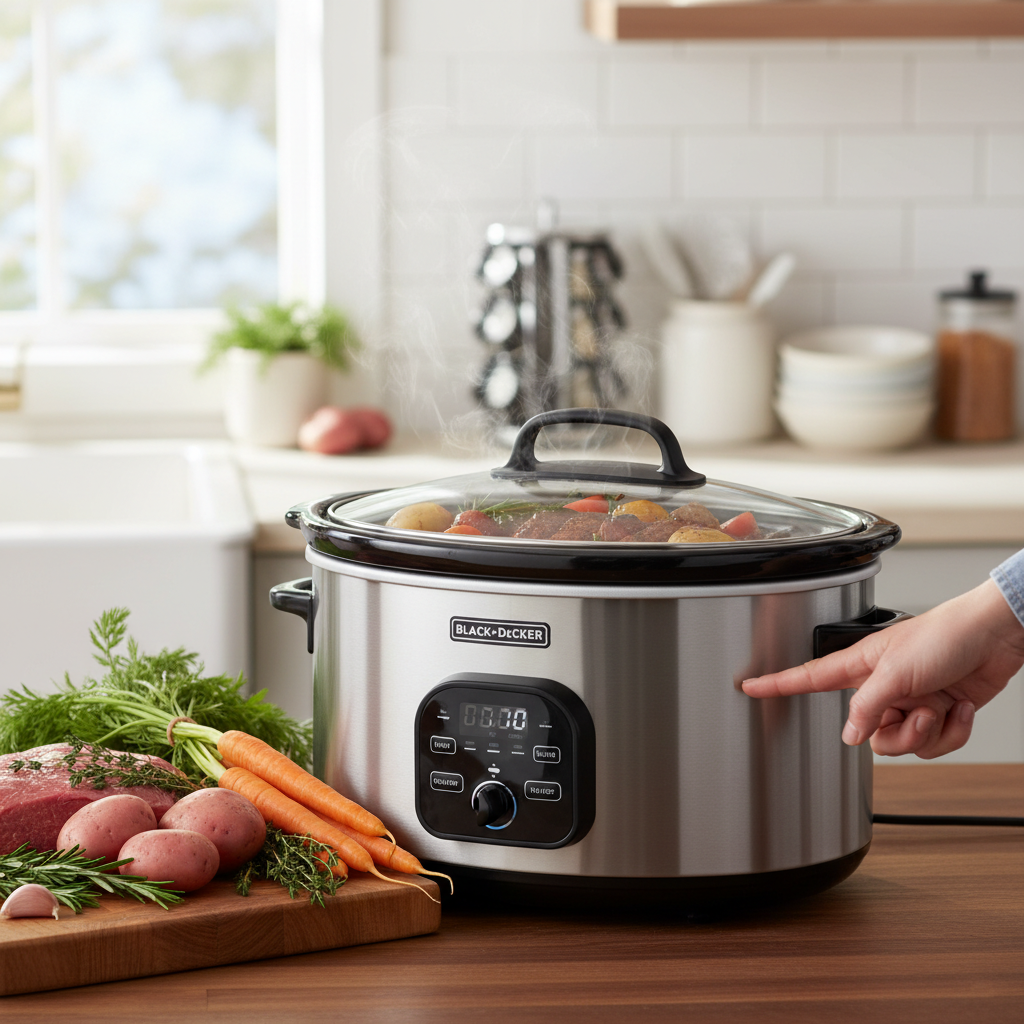
The slow cooker, often synonymous with the Crock-Pot, is an electric countertop appliance designed for long, unattended cooking at low, consistent temperatures. Its primary appeal lies in its unparalleled convenience, allowing busy individuals to prepare meals with minimal effort. You can simply add your ingredients in the morning and return home to a hot, ready-to-eat dinner.
The slow cooker’s tightly sealed lid and steady, low heat prevent significant moisture loss, ensuring meats remain exceptionally moist and tender. This environment is perfect for stewing and braising, where the goal is to break down tough fibers over several hours. Furthermore, slow cookers typically consume less electricity than a conventional oven, making them a more energy-efficient choice for extended cooking. However, their design generally prevents effective searing within the same pot, which can lead to a less developed flavor profile if meat is not browned beforehand in a separate pan. This extra step adds to cleanup and can detract from the “one-pot” appeal. The consistent, low temperature also means sauces may not reduce as much, sometimes resulting in a thinner consistency.
The Dutch Oven: Master of Flavor and Versatility
A Dutch oven is a heavy, thick-walled cooking pot, typically made from cast iron, often enameled. Renowned for its exceptional heat retention and even distribution, this classic piece of cookware is incredibly versatile, transitioning seamlessly from stovetop to oven.
The robust construction of a Dutch oven allows for superior searing and browning directly in the pot on the stovetop. This initial high-heat step is crucial for developing deep, layered flavors that are characteristic of well-braised dishes. After searing, the Dutch oven, with its tight-fitting lid, moves to the oven, where it provides a consistent, all-around heat that cooks food evenly. This method can lead to a richer sauce as some moisture gently evaporates, concentrating flavors. Dutch ovens are not limited to braising; they can be used for frying, roasting, baking bread, simmering soups, and much more, making them a true workhorse in any kitchen. While they offer more control over the cooking process and potentially richer results, they demand more hands-on attention, especially during the searing phase and potentially for monitoring liquid levels during longer cooks.
Head-to-Head: Slow Cooker vs. Dutch Oven Braising
When comparing these two methods for braising, several key factors come into play, influencing both the cooking experience and the final dish.
| Feature | Slow Cooker | Dutch Oven |
|---|---|---|
| Browning/Searing | Not possible in the unit; requires separate pan | Excellent; can sear directly on stovetop |
| Convenience | High; “set-and-forget” for long periods | Moderate; requires more hands-on attention |
| Flavor Depth | Good, but can be one-dimensional without searing | Superior; deep, layered flavors from browning |
| Texture of Meat | Ultra-tender, very moist | Tender, moist, often with a richer crust |
| Sauce Quality | Thinner; less reduction | Richer, more concentrated |
| Versatility | Limited to slow-cooking, stews, soups | High; searing, roasting, baking, frying, etc. |
| Cook Time | Longer (e.g., 8 hours for stew) | Potentially faster (e.g., 3-4 hours for stew) |
| Energy Consumption | Lower | Higher (uses oven) |
| Monitoring | Minimal | More attentive, especially for stovetop braising |
Browning & Flavor Development: The ability to sear meat directly in a Dutch oven before braising is a significant advantage. This step creates the Maillard reaction, which adds unparalleled depth and complexity to the final flavor profile. While you can brown meat in a separate pan before adding it to a slow cooker, this negates some of the “one-pot” convenience and adds to cleanup. Slow cookers, by design, cannot achieve this browning.
Moisture & Texture: Slow cookers, with their tight seals, tend to trap almost all moisture, leading to incredibly moist and often shredded meats. There’s minimal evaporation, so sauces remain quite liquid. Dutch ovens, especially when braising in an oven, allow for some evaporation, which can help concentrate the flavors of the braising liquid into a richer sauce. The texture of meat from a Dutch oven often has a more nuanced exterior, particularly if a good sear was achieved.
Time & Effort: The slow cooker is the undisputed champion of hands-off cooking. You can load it with ingredients and leave it unattended for hours, making it perfect for busy weekdays. A Dutch oven braise, particularly one started on the stovetop and then moved to the oven, requires more active attention initially and some monitoring throughout. However, some tests indicate that a Dutch oven might achieve comparable tenderness in a shorter overall cooking time than a slow cooker.
Versatility Beyond Braising: A Dutch oven is a multi-functional kitchen tool capable of a wide array of cooking tasks, from baking artisan bread to deep-frying and simmering soups. A slow cooker, conversely, is a single-purpose appliance, primarily excelling at low-temperature, moist-heat cooking.
“A Dutch oven can replicate slow cooker results when used at low oven temperatures over extended periods. Stews and braises cooked at 275–300°F become equally tender, while benefiting from better browning and sauce reduction. However, it lacks the hands-off convenience of a slow cooker. Think of the Dutch oven as a more artisanal form of slow cooking—less passive, but richer in flavor and visual appeal.” – Vancasso
Choosing Your Braising Partner: A Buying Guide
The choice between a slow cooker and a Dutch oven for braising ultimately depends on your individual cooking style, priorities, and lifestyle.
- For the Busy Cook (Convenience is King): If you have a demanding schedule and crave the ability to “set it and forget it,” a slow cooker is an invaluable tool. It allows you to prepare delicious, tender braised dishes with minimal active cooking time, perfect for weeknight meals.
- For the Flavor Purist (Depth of Flavor is Paramount): If you prioritize rich, complex flavors and appreciate the art of searing and deglazing, a Dutch oven will be your preferred choice. The ability to perform the entire braising process, from searing to simmering, in one vessel truly enhances the final taste and texture.
- For Versatility and Control: If you desire a multi-functional piece of cookware that can handle a wide range of cooking tasks beyond just braising, a Dutch oven offers unmatched versatility. It’s an investment that pays off across many culinary applications.
- Budget and Space: Slow cookers are generally more affordable and often take up less counter space when in use, though a Dutch oven can be stored in the oven.
Tips for Maximizing Your Braise (Regardless of Appliance)
Whether you opt for a slow cooker or a Dutch oven, a few universal tips will elevate your braising game:
- Sear Your Meat: Always brown your meat thoroughly before braising. If using a slow cooker, do this in a separate pan to develop rich flavor.
- Deglaze the Pan: After searing, use a splash of wine, stock, or water to scrape up any browned bits from the bottom of the pan (if using a Dutch oven or a separate pan). These “fond” bits are packed with flavor.
- Don’t Drown Your Ingredients: Braising requires only a small amount of liquid, typically covering about one-third to halfway up the meat. Too much liquid will stew rather than braise your food.
- Low and Slow is Key: Patience is a virtue in braising. Allow ample time for the collagen to break down, ensuring fork-tender results.
- Check for Doneness: Meat is perfectly braised when it’s easily shredded with a fork, not just when it reaches a certain internal temperature.
- Thicken Your Sauce: If your braising liquid is too thin at the end, remove the meat and vegetables, then reduce the liquid on the stovetop (in a Dutch oven) or in a separate saucepan (for slow cooker liquid) until it reaches your desired consistency. You can also add a cornstarch slurry.
Conclusion
Both slow cookers and Dutch ovens are exceptional tools for the art of braising, each offering a pathway to tender, flavorful dishes. The slow cooker shines with its unparalleled convenience and ability to deliver moist results with minimal effort, making it ideal for busy schedules. The Dutch oven, with its superior browning capabilities and stovetop-to-oven versatility, often yields a more complex, layered flavor profile that discerning palates appreciate. Ultimately, the best choice depends on your culinary priorities, whether you value hands-off ease or a more active approach to achieving the deepest possible flavors. Whichever you choose, mastering braising will undoubtedly enrich your home cooking.
What braised dish will you create next with your chosen kitchen companion?
Frequently Asked Questions
Can you braise in a slow cooker effectively?
|
Our Picks for the Best Slow cooker in 2026
As an Amazon Associate I earn from qualifying purchases.
|
||
| Num | Product | Action |
|---|---|---|
| 1 | Instant Pot Duo 7-in-1 Electric Pressure Cooker, Slow Cooker, Rice, Steamer, Sauté, Yogurt Maker, Warmer & Sterilizer, Includes App With Over 800 Recipes, Stainless Steel, 6 Quart |

|
| 2 | Hamilton Beach Slow Cooker, Extra Large 10 Quart, Stay or Go Portable With Lid Lock, Dishwasher Safe Crock, Black (33195) |
|
| 3 | Ninja® 12-in-1 PossibleCooker™ PLUS | 8.5-qt - Sous Vide & Proof Multi-Cooker | Slow Cooker, Dutch Oven & More | Glass Lid & Integrated Spoon | Nonstick | Oven Safe Pot to 500°F | Black | MC1010 |
|
| 4 | Crock-pot Express Crock Slow Cooker 8 quart Red |
|
| 5 | Crock-Pot 7 Quart Oval Manual Slow Cooker, Stainless Steel (SCV700-S-BR), Versatile Cookware for Large Families or Entertaining |
|
| 6 | Crock-Pot 6 Quart Cook & Carry Programmable Slow Cooker with Digital Timer Stainless Steel (CPSCVC60LL-S) pack of 1 |
|
| 7 | Crock-Pot Large 8-Quart Programmable Slow Cooker with Auto Warm Setting Black Stainless Steel |
|
| 8 | Crock-Pot 7-Quart Manual Slow Cooker, Family Size Serves 8+ People or Fits 6-lb Roast, Removable Stoneware with Warming Setting, Dishwasher Safe for Easy Cleanup, Charcoal |
|
| 9 | Hamilton Beach 6-Quart Slow Cooker with 3 Cooking Settings, Dishwasher-Safe Stoneware Crock & Glass Lid, Silver (33665G) |
|
| 10 | Sweetcrispy 16-in-1 Electric Pressure Cooker 6QT, 12-Preset Multi Cookers with Ceramic Pot, Slow Cook Rice Steamer Sauté Soup Yogurt Maker and More, Recipe Book |
|
Yes, you can effectively braise in a slow cooker. While it may not achieve the initial deep browning of a Dutch oven, the slow cooker’s consistent low heat and moisture retention are excellent for breaking down tough cuts of meat into tender, succulent dishes. For best results, consider searing your meat in a separate pan before adding it to the slow cooker to enhance flavor.
Is Dutch oven braising faster than using a slow cooker?
For comparable tenderness, Dutch oven braising in a conventional oven can sometimes be faster than a slow cooker. While a slow cooker typically requires 6-8 hours on low, a Dutch oven braise might achieve similar results in 3-4 hours in an oven set to a low temperature like 275-300°F, depending on the cut of meat and recipe.
Does searing meat truly make a difference for braising?
Yes, searing meat before braising makes a significant difference. The high-heat browning creates the Maillard reaction, developing hundreds of new flavor compounds that add depth, richness, and complexity to your dish. Skipping this step can result in a less flavorful, more one-dimensional braise.
Which appliance is more energy-efficient for braising?
Slow cookers are generally more energy-efficient than using a conventional oven with a Dutch oven for long cooking periods. A slow cooker draws relatively little power over several hours, whereas an oven consumes significantly more electricity to maintain its temperature.
Can I get a crispy exterior on meat when braising in a slow cooker?
It is very difficult to achieve a crispy exterior on meat directly in a slow cooker due to its moist, sealed cooking environment. For a crispy crust on your braised meat from a slow cooker, you would typically need to transfer the cooked meat to a hot oven or under a broiler for a short period after braasing.