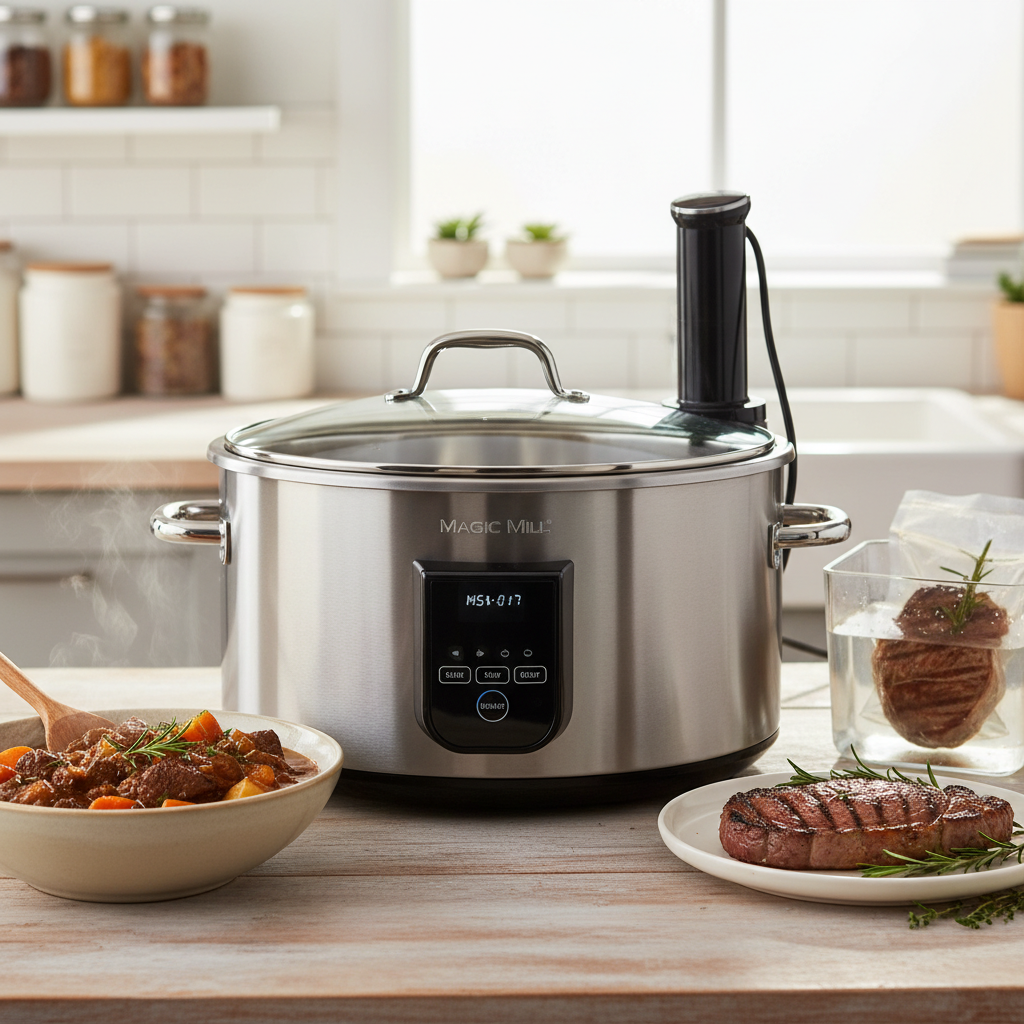
The slow cooker, a cornerstone of convenient home cooking, relies on a simple yet crucial component to work its magic: the lid. This unassuming cover traps heat and moisture, transforming tough cuts of meat into tender delights and melding flavors over hours of gentle simmering. But have you ever considered if the material of your slow cooker’s lid—glass or metal—makes a significant difference in its performance, particularly concerning heat loss? This often-overlooked detail can subtly influence everything from cooking times to the final texture of your culinary creations.
The Unsung Hero: Understanding Your Slow Cooker Lid
At its core, a slow cooker operates on the principle of low and slow heat, typically between 180°F and 300°F. The lid plays a pivotal role in maintaining this stable environment. It creates a low-pressure seal that prevents steam and moisture from escaping, which is essential for tenderizing food and infusing flavors deeply into your dish. Without an effective lid, the slow cooker would essentially become an open pot, losing valuable heat and moisture through evaporation and convection, leading to dried-out food and inefficient cooking.
Heat loss in a slow cooker primarily occurs through several mechanisms. The most significant is often through convection, where heated air and steam escape whenever the lid is lifted. Even a brief peek can cause a noticeable temperature drop inside the pot, which then requires the appliance to expend more energy to recover. Conduction also contributes, as heat transfers directly through the lid material itself and any gaps around its rim. The lid’s ability to minimize these losses is central to the slow cooker’s efficiency and your meal’s success.
Glass Lids: Transparency and Practicality
Glass lids are a ubiquitous feature on many slow cookers, offering a clear window into your cooking process. This transparency is often cited as their primary advantage.
Advantages of Glass Lids
- Visibility: The ability to visually monitor your food without lifting the lid is a major benefit. This allows you to check on doneness, assess liquid levels, and ensure everything is bubbling as it should be, all while keeping precious heat and moisture locked inside. This can potentially reduce overall heat loss by minimizing the urge to lift the lid.
- Ease of Cleaning: Many users find tempered glass lids, particularly those made from Pyrex, easier to clean than their metal counterparts. They often wash beautifully in a dishwasher and are less prone to rust.
- Insulation (in theory): From a material science perspective, glass is generally considered a better insulator than stainless steel. This theoretical advantage could suggest better heat retention, though practical design elements often complicate this.
- Affordability: Glass lids are widely available across various price points, making them an accessible and budget-friendly option for many home cooks.
|
Our Picks for the Best Slow cooker in 2026
As an Amazon Associate I earn from qualifying purchases.
|
||
| Num | Product | Action |
|---|---|---|
| 1 | Instant Pot Duo 7-in-1 Electric Pressure Cooker, Slow Cooker, Rice, Steamer, Sauté, Yogurt Maker, Warmer & Sterilizer, Includes App With Over 800 Recipes, Stainless Steel, 6 Quart |

|
| 2 | Sweetcrispy 16-in-1 Electric Pressure Cooker 6QT, 12-Preset Multi Cookers with Ceramic Pot, Slow Cook Rice Steamer Sauté Soup Yogurt Maker and More, Recipe Book |
|
| 3 | Hamilton Beach Slow Cooker, Extra Large 10 Quart, Stay or Go Portable With Lid Lock, Dishwasher Safe Crock, Black (33195) |
|
| 4 | Ninja® 12-in-1 PossibleCooker™ PLUS | 8.5-qt - Sous Vide & Proof Multi-Cooker | Slow Cooker, Dutch Oven & More | Glass Lid & Integrated Spoon | Nonstick | Oven Safe Pot to 500°F | Black | MC1010 |
|
| 5 | Crock-Pot Large 8-Quart Programmable Slow Cooker with Auto Warm Setting Black Stainless Steel |
|
| 6 | Crock-pot Express Crock Slow Cooker 8 quart Red |
|
| 7 | Crock-Pot 7-Quart Manual Slow Cooker, Family Size Serves 8+ People or Fits 6-lb Roast, Removable Stoneware with Warming Setting, Dishwasher Safe for Easy Cleanup, Charcoal |
|
| 8 | Hamilton Beach 6-Quart Slow Cooker with 3 Cooking Settings, Dishwasher-Safe Stoneware Crock & Glass Lid, Silver (33665G) |
|
| 9 | Crock-Pot 7 Quart Oval Manual Slow Cooker, Stainless Steel (SCV700-S-BR), Versatile Cookware for Large Families or Entertaining |
|
| 10 | Crock-Pot 6 Quart Cook & Carry Programmable Slow Cooker with Digital Timer Stainless Steel (CPSCVC60LL-S) pack of 1 |
|
Disadvantages of Glass Lids
- Breakability: Glass, especially when dropped, is susceptible to shattering. It can also be vulnerable to thermal shock, meaning sudden temperature changes (like transferring a hot lid directly into cold water) can cause it to crack. This poses a safety concern and affects longevity.
- Steam Vents: Many glass lids incorporate a small steam vent. While intended to release excess pressure, these vents also provide a consistent escape route for heat and moisture, potentially offsetting some of the glass’s insulating advantages.
- Fogging: Despite their transparency, glass lids can fog up due to condensation, obscuring visibility and negating their main advantage.
- Weight: Some glass lids, particularly thicker tempered varieties, can be heavier than metal options.
- Cleaning Nuances: The crevices around handles or vent holes on glass lids can sometimes trap food particles and bacteria, requiring more meticulous cleaning.
Metal Lids: Durability and Thermal Efficiency
Metal lids, most commonly made from stainless steel, present a different set of characteristics for slow cooker users. They are often associated with robustness and reliable performance.
Advantages of Metal Lids
- Durability: Metal lids are incredibly tough. They are far less prone to breaking or cracking if dropped and can withstand significant wear and tear, making them a long-lasting component of your slow cooker. They handle high heat exceptionally well and are resistant to dents.
- Robust Heat Retention: While glass is theoretically a better insulator, metal lids often prove more effective at retaining heat in practice, particularly due to their design. Many metal lids lack steam vents, creating a tighter seal that minimizes consistent heat and moisture escape. Their construction also allows for even heat distribution across the lid’s surface.
- Oven-Safe: Metal lids are frequently oven-safe to higher temperatures than glass lids, offering greater versatility if your slow cooker insert is also oven-compatible.
- Lighter Weight: Generally, metal lids tend to be lighter than glass lids, which can be a minor convenience for handling. If steam pressure builds up too much, a lighter metal lid may “burp” more frequently with smaller releases of steam.
Disadvantages of Metal Lids
- Opaque Design: The primary drawback of a metal lid is its opacity. You cannot see the food cooking without lifting the lid. This can lead to more frequent lid-lifting, which, as discussed, is a significant source of heat and moisture loss, potentially extending cooking times.
- Pricier: High-quality stainless steel lids often come with a higher price tag compared to standard glass options.
- Heat Conduction: Metal is a better conductor of heat than glass. While this can contribute to even heat distribution, it also means the lid itself will get very hot to the touch, requiring careful handling.
- Potential for Rust: Cheaper or lower-grade stainless steel can be susceptible to rust over time if not properly cared for.
Direct Comparison: Heat Loss Dynamics
When comparing heat loss directly, the interaction between material properties and user behavior becomes critical. Theoretically, glass has better insulating properties than stainless steel. However, the common inclusion of steam vents in glass lids can negate this advantage, as these vents provide an avenue for heat and moisture to continuously escape. Metal lids, often designed without such vents, can create a more complete seal, which might lead to better overall heat and moisture retention during the cooking cycle.
The most significant factor influencing heat loss, regardless of lid material, is the act of lifting the lid. Each time you peek into your slow cooker, the internal temperature can drop by as much as 10 to 27 degrees Fahrenheit. This temperature drop can extend the cooking time by 15 minutes to an hour as the slow cooker works to recover. Here, the transparency of a glass lid offers a practical advantage: by allowing you to observe your food without disturbing the seal, it can indirectly lead to less overall heat loss compared to an opaque metal lid, which might tempt you to peek more frequently.
“While the material properties of a lid play a role, the real ‘heat villain’ in slow cooking is frequently lifting the lid. A clear glass lid empowers you to resist that urge, which can be more impactful than the marginal differences in material insulation.” – Admin, reviewfcs.com
Ultimately, the inherent heat retention of the slow cooker’s ceramic or metal insert, coupled with its consistent heating element, means that for short, infrequent peeks, the material of the lid itself may not cause a drastic difference in overall cooking efficiency or time. The main concern is consistent disturbance of the cooking environment.
Beyond Heat Loss: Other Factors to Consider
While heat loss is a key consideration, other practical aspects can sway your preference:
- Durability: If your kitchen sees a lot of activity or if clumsy moments are common, the shatter-resistant nature of a metal lid might be a significant advantage over the more fragile glass.
- Cleaning and Maintenance: Glass lids are generally simpler to clean, though crevices can be tricky. Metal lids are robust, but ensure they are dried thoroughly to prevent water spots or potential rust on lower-grade stainless steel.
- Cost: Glass lids are often more affordable initially, while high-quality metal lids might represent a greater upfront investment but offer superior longevity.
- Aesthetics: Some cooks prefer the sleek, uniform look of a full metal slow cooker, while others appreciate the visual appeal and functional transparency of a glass lid.
- Versatility: If you intend to use your slow cooker insert for other purposes, such as oven cooking, a metal lid may offer greater high-temperature resistance.
Making Your Choice: Which Lid is Right for You?
Choosing between a glass and metal lid for your slow cooker ultimately boils down to prioritizing certain features based on your cooking style and household needs.
- Choose a Glass Lid if:
- Visibility is Key: You prefer to monitor your food’s progress without disrupting the cooking environment.
- Ease of Cleaning: You value simpler, often dishwasher-safe cleaning.
- Budget-Conscious: You’re looking for a more affordable option.
- Choose a Metal Lid if:
- Durability is Paramount: You need a lid that can withstand drops and heavy use.
- Maximum Heat/Moisture Retention: You prioritize the tightest possible seal, often without steam vents, for consistent low-and-slow cooking.
- Versatility: You plan to use your slow cooker insert in the oven.
Conclusion
The lid of your slow cooker, whether crafted from transparent glass or robust metal, plays a more significant role than you might imagine in your cooking success. While theoretical insulation properties vary, the practical impact of each material on heat loss often comes down to design—particularly the presence or absence of steam vents—and crucially, your habit of lifting the lid. Glass offers the undeniable advantage of visibility, potentially reducing peeking and thereby minimizing heat loss. Metal, on the other hand, provides unparalleled durability and often a superior seal for consistent thermal efficiency.
Understanding these distinctions allows you to make an informed choice that aligns with your cooking preferences and ensures your slow-cooked meals are always tender, flavorful, and perfectly cooked. Which lid characteristic do you value most in your slow-cooking adventures?
Frequently Asked Questions
Does opening the slow cooker lid really add cooking time?
Yes, opening the slow cooker lid, even for a brief moment, can significantly reduce the internal temperature and release steam. This typically adds 15 to 30 minutes, or even more, to the overall cooking time as the appliance works to regain its optimal heat. It is best to minimize lid lifting to maintain consistent cooking.
Are all slow cooker lids sealed?
Most slow cooker lids are designed to create a low-pressure seal, but not all create an airtight seal. Some, particularly glass lids, often have a small vent hole or a slightly looser fit to allow minimal steam to escape, preventing excessive pressure buildup. Metal lids may offer a tighter seal due to their solid construction.
Can I use aluminum foil instead of a slow cooker lid?
While aluminum foil can serve as a temporary cover, it is not ideal for long-term slow cooking. It typically does not create as effective a seal as a purpose-built lid, leading to greater heat and moisture loss, which can affect cooking times and food quality. Using the proper lid is always recommended for best results.
Does the lid material affect the flavor of the food?
The material of the lid itself (glass or metal) generally does not directly affect the flavor of the food. The primary influence on flavor comes from how effectively the lid retains moisture and heat, which in turn impacts the tenderizing and melding of ingredients. An ill-fitting or frequently lifted lid, regardless of material, would negatively affect flavor by drying out the food.