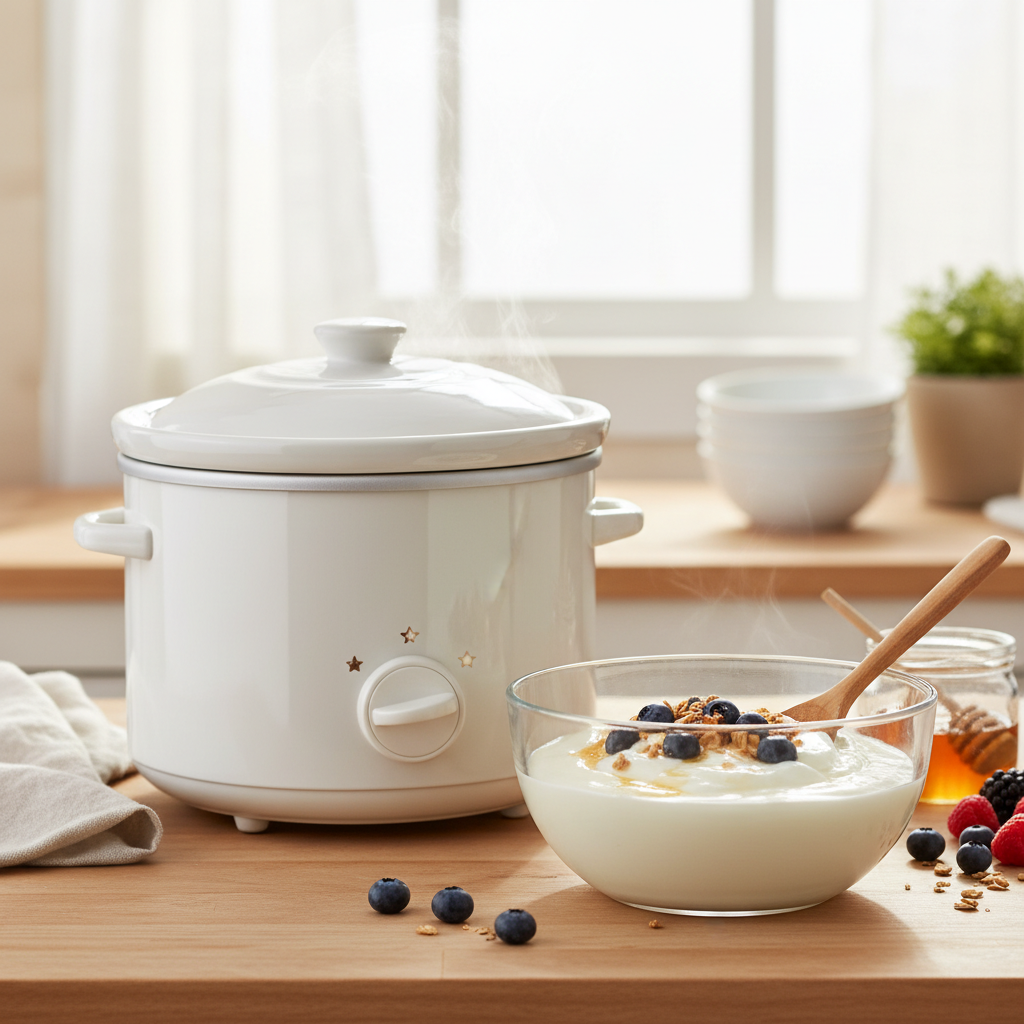
In our increasingly connected world, kitchen appliances are rapidly evolving to keep pace with our busy lifestyles, and the slow cooker is no exception. For decades, the humble slow cooker has been a beacon of convenience, transforming tough cuts of meat and simple ingredients into delicious, ready-to-eat meals with minimal effort. But what if you could manage your meal from anywhere, ensuring dinner is perfect even when your schedule isn’t? This is where smart slow cookers with WiFi app control come into their own, offering a new level of flexibility and peace of mind for the modern home chef.
The Evolution of Slow Cooking: Embracing Smart Technology
Slow cooking, with its low-and-slow approach, has always been about convenience. The initial appeal was the ability to “set it and forget it,” leaving food to simmer gently all day. This traditional method, often using a ceramic insert and simple heat settings, allowed for deep flavor development and tender results, ideal for stews, roasts, and soups.
The culinary landscape, however, is continuously shaped by technological advancements. As smart home devices became prevalent, it was only a matter of time before our cooking appliances followed suit. A WiFi-enabled slow cooker integrates this traditional convenience with modern connectivity. Essentially, it’s a slow cooker equipped with smart technology that allows it to connect to your home’s WiFi network. This connection enables you to control and monitor the appliance remotely via a dedicated app on your smartphone, tablet, or smartwatch. From adjusting cooking times and temperatures to switching to a “keep warm” setting, you gain control over your meal from virtually anywhere, ensuring your food is never overcooked or underdone, even when life throws unexpected curveballs.
Unlocking Convenience: Benefits of WiFi-Controlled Slow Cookers
The primary allure of a smart slow cooker lies in its unparalleled convenience, fundamentally changing how you manage meal preparation.
- Remote Control and Monitoring: Imagine being stuck in traffic or a late meeting, realizing your stew might be done. With a WiFi slow cooker, you can simply open an app on your phone to check the cooking status, adjust the temperature, or switch to a warming mode, all without being physically present. This remote accessibility is a game-changer for maintaining meal quality on unpredictable days.
- Time Shifting, Not Just Saving: While a smart slow cooker won’t magically make your food cook faster, it offers invaluable “time shifting” capabilities. This means you can adapt your cooking schedule on the fly, pausing or extending cooking as needed, ensuring your meal is ready precisely when you are, rather than at a fixed, unchangeable time.
- Notifications and Alerts: Forget to start dinner? Or worried about overcooking? Your smart slow cooker can send notifications directly to your device, alerting you when cooking cycles are complete, if you’ve forgotten a step, or even with recipe suggestions. This proactive communication helps prevent culinary mishaps and keeps you organized.
- Integrated Recipe Libraries and Guides: Many companion apps for smart slow cookers come pre-loaded with extensive recipe libraries, offering nutritional breakdowns and step-by-step cooking instructions tailored for your device. This not only inspires new meal ideas but also simplifies the cooking process, making it easier to try complex dishes.
- Smart Home Integration: Some models can integrate with popular smart assistants like Amazon Alexa or Google Home, allowing for voice-activated commands. Saying “Turn my chili to low” across the room or across town adds another layer of hands-free convenience to your cooking routine.
Essential Features to Look for in a Smart Slow Cooker
Choosing the best smart slow cooker involves considering several factors beyond just WiFi connectivity to ensure it meets your specific culinary needs.
- Capacity and Size: Slow cookers come in various capacities, typically ranging from 1-3 quarts for individuals or couples to 6-8 quarts for families and entertaining. Consider your average meal size and how often you cook for groups to select an appropriate volume [1 – Quora]. Larger capacities are great for meal prepping or parties, while smaller ones are ideal for everyday use for one or two people.
- Material and Design: Most slow cookers feature a removable stoneware or ceramic crock, which is excellent for even heat distribution and easy cleaning. Look for models with dishwasher-safe inserts and lids for hassle-free cleanup [1 – Walmart]. A transparent glass lid is beneficial for monitoring food without releasing heat, and cool-touch handles are essential for safe transport.
- Digital Controls and Programmability: Beyond the app, the on-device controls should be intuitive and easy to use. Digital displays that show remaining cook time and temperature settings are standard in modern models. Ensure it has essential settings like High, Low, and Warm, and the ability to set precise cooking durations [1 – Quora].
- App Functionality and User Experience: The quality of the accompanying app is paramount for a smart slow cooker. A well-designed app should offer seamless connectivity, an intuitive interface, reliable remote control (adjusting time, temperature, shifting to warm), and useful notifications. Check reviews specifically addressing app stability and ease of use.
- Additional Features:
- Food Probes: Some advanced models include a built-in food thermometer that allows you to set a target internal temperature for meats. The cooker then automatically switches to warm or turns off when the desired doneness is reached, preventing overcooking [4 – Food Network].
- Multi-Cooker Capabilities: While a dedicated slow cooker is excellent, some smart appliances are multi-cookers that include a slow cook function alongside pressure cooking, sautéing, steaming, and even baking. These versatile machines can save counter space and offer more cooking options [4 – Food Network]. However, note that some multi-cookers may not perform dedicated slow cooking as effectively as traditional models [1 – Instant Pot vs. slow cooker].
- Automatic Stirring Attachments: A rarer but innovative feature, automatic stirrers ensure even cooking and flavor distribution, particularly useful for dishes prone to sticking or uneven heating [1 – Best Buy].
Top WiFi-Enabled Slow Cookers: Our 2026 Recommendations
While predicting specific “2026” models can be challenging due to rapid innovation, several brands have established themselves in the smart slow cooker market. We’ll highlight leading options and features to guide your choice, focusing on their smart capabilities and overall performance.
- Crock-Pot Smart Slow Cooker Enabled by WeMo: A pioneer in the smart slow cooker space, the 6-Quart Crock-Pot WeMo model offers robust WiFi connectivity. Its free WeMo app allows users to remotely adjust cooking time, temperature, and switch to “keep warm” mode from anywhere with 3G/4G/WiFi. It features a traditional oval design, a removable stoneware crock for easy cleaning, and cool-touch handles. Users appreciate its straightforward setup and app interface, making it a reliable choice for remote cooking management.
- Black & Decker WiFi-Enabled Slow Cooker: Similar to Crock-Pot, Black & Decker also introduced a WiFi-enabled slow cooker that allows app control over cook settings, such as transitioning from high heat to warm if you’re running late [4 – Black & Decker]. While specific current models might vary, Black & Decker typically offers dependable appliances with practical features for everyday use.
- CHEF iQ Smart Cooker: While primarily a multi-cooker with pressure cooking at its core, the CHEF iQ Smart Cooker exemplifies the future of smart kitchen tech and includes slow cook functionality. It stands out with a sleek design, a built-in scale for precise ingredient measurement, and an intuitive, beginner-friendly app that removes guesswork from cooking [4 – Chef IQ]. Its wireless food probe ensures perfect doneness, and the app offers a rich library of recipes and step-by-step guides, integrating advanced smart features that could enhance any cooking style [4 – Chef IQ]. While not solely a slow cooker, its comprehensive smart features make it a strong contender for those seeking an all-in-one connected appliance.
When considering a smart slow cooker for 2026, look for models from reputable brands that prioritize app stability, user-friendly interfaces, and reliable connectivity. The key is to find a device where the smart features genuinely enhance your cooking experience without adding unnecessary complexity.
Smart Slow Cooker vs. Multi-Cooker (Instant Pot): Which is Right for You?
The rise of multi-cookers like Instant Pots has led many to question the need for a dedicated slow cooker. While both offer convenience, their core functionalities and optimal use cases differ significantly, especially when considering smart features.
“A dedicated slow cooker excels at developing deep, nuanced flavors over extended periods, an effect that multi-cookers often struggle to replicate due to their different heating mechanisms.” – Olivia Roszkowski, Chef-Instructor at the Institute of Culinary Education [5 – Martha Stewart].
-
Dedicated Slow Cooker Advantages:
- Consistent Low Heat: Traditional slow cookers are designed to maintain a consistent low temperature, ideal for tenderizing tough meats and melding flavors over many hours [5 – Martha Stewart].
- Simplicity: Often simpler to operate with fewer settings, embodying the true “set and forget” ethos [3 – Slow cooker vs. Instant Pot].
- Specific Slow Cooking Performance: Many users and experts note that the slow cook function on multi-cookers may not achieve the same results as a dedicated slow cooker, sometimes failing to reach adequate temperatures [1 – Instant Pot vs. slow cooker].
-
Multi-Cooker (Instant Pot) Advantages:
- Speed and Versatility: Multi-cookers shine in their ability to pressure cook meals significantly faster than traditional methods, along with functions like sautéing, steaming, and rice cooking [3 – Slow cooker vs. Instant Pot].
- Space Saving: Consolidating multiple appliances into one unit is a major benefit for smaller kitchens.
- Advanced Features: Newer smart multi-cookers, like the CHEF iQ, offer integrated scales, smart probes, and extensive app-guided recipes [4 – Chef IQ].
Ultimately, the choice depends on your cooking habits. If you frequently rely on long, slow simmering for optimal flavor and texture, a dedicated smart slow cooker might be the better fit. If speed and a wide array of cooking functions are your priority, a smart multi-cooker could be a more versatile addition to your kitchen. Many households, in fact, opt to have both for maximum flexibility [4 – Crock pot versus instapot].
Tips for Maximizing Your Smart Slow Cooker Experience
To get the most out of your WiFi-enabled slow cooker, consider these practical tips:
- Master the App: Spend time exploring all the features of your slow cooker’s companion app. Familiarize yourself with remote start/stop, temperature adjustments, timer settings, and any integrated recipe functions. A robust app is the heart of your smart slow cooker experience.
- Ensure Stable WiFi Connectivity: For seamless remote control, a strong and stable home WiFi signal is crucial. Place your slow cooker within a reasonable range of your router to avoid connectivity drops that could disrupt cooking or prevent remote access.
- Prepare Ingredients in Advance: Maximize convenience by doing your meal prep (chopping vegetables, browning meat) the night before. In the morning, simply combine the prepped ingredients in the slow cooker, and you’re ready to start cooking remotely.
- Utilize the “Keep Warm” Function: This feature is invaluable for busy schedules. If you know you’ll be home later than expected, use the app to switch your slow cooker to “keep warm” mode, ensuring your meal stays at a safe serving temperature without overcooking [4 – Black & Decker].
- Clean and Maintain Regularly: Always follow the manufacturer’s cleaning instructions. Most removable crocks and glass lids are dishwasher safe, making cleanup simple. Regular cleaning prevents food residue buildup and maintains appliance longevity.
- Explore Recipe Resources: Look beyond the app’s built-in recipes. Many online communities and food blogs offer recipes specifically tailored for smart slow cookers, often including tips for remote cooking and ingredient adjustments.
Conclusion
The smart slow cooker with WiFi app control represents a significant leap forward in kitchen convenience, seamlessly blending traditional, hands-off cooking with modern connectivity. It liberates you from the confines of your kitchen, offering the flexibility to manage meals from anywhere, adapt to unpredictable schedules, and ensure consistently delicious results. For busy professionals, parents, or anyone seeking to simplify meal preparation without compromising on quality, a smart slow cooker is more than just an appliance; it’s an intelligent partner in your culinary journey.
Are you ready to embrace the future of cooking and transform your dinner routine with the power of WiFi control?
Câu Hỏi Thường Gặp
How does a WiFi slow cooker differ from a traditional one?
|
Our Picks for the Best Slow cooker in 2026
As an Amazon Associate I earn from qualifying purchases.
|
||
| Num | Product | Action |
|---|---|---|
| 1 | Crock-pot Express Crock Slow Cooker 8 quart Red |

|
| 2 | Crock-Pot Large 8-Quart Programmable Slow Cooker with Auto Warm Setting Black Stainless Steel |
|
| 3 | Hamilton Beach Slow Cooker, Extra Large 10 Quart, Stay or Go Portable With Lid Lock, Dishwasher Safe Crock, Black (33195) |
|
| 4 | Sweetcrispy 16-in-1 Electric Pressure Cooker 6QT, 12-Preset Multi Cookers with Ceramic Pot, Slow Cook Rice Steamer Sauté Soup Yogurt Maker and More, Recipe Book |
|
| 5 | Crock-Pot 7 Quart Oval Manual Slow Cooker, Stainless Steel (SCV700-S-BR), Versatile Cookware for Large Families or Entertaining |
|
| 6 | Crock-Pot 7-Quart Manual Slow Cooker, Family Size Serves 8+ People or Fits 6-lb Roast, Removable Stoneware with Warming Setting, Dishwasher Safe for Easy Cleanup, Charcoal |
|
| 7 | Crock-Pot 6 Quart Cook & Carry Programmable Slow Cooker with Digital Timer Stainless Steel (CPSCVC60LL-S) pack of 1 |
|
| 8 | Ninja® 12-in-1 PossibleCooker™ PLUS | 8.5-qt - Sous Vide & Proof Multi-Cooker | Slow Cooker, Dutch Oven & More | Glass Lid & Integrated Spoon | Nonstick | Oven Safe Pot to 500°F | Black | MC1010 |
|
| 9 | Hamilton Beach 6-Quart Slow Cooker with 3 Cooking Settings, Dishwasher-Safe Stoneware Crock & Glass Lid, Silver (33665G) |
|
| 10 | Instant Pot Duo 7-in-1 Electric Pressure Cooker, Slow Cooker, Rice, Steamer, Sauté, Yogurt Maker, Warmer & Sterilizer, Includes App With Over 800 Recipes, Stainless Steel, 6 Quart |
|
A WiFi slow cooker connects to your home network, allowing you to control and monitor cooking functions like temperature, time, and warming settings remotely via a smartphone app. Traditional slow cookers require manual operation directly on the appliance.
Can I really start cooking remotely with a smart slow cooker?
Yes, most WiFi-enabled slow cookers allow you to start, stop, and adjust cooking cycles from your smartphone app, provided the ingredients are already in the pot and the cooker is connected to your home WiFi network. This feature is ideal for busy individuals who want to initiate cooking while away from home.
Are smart slow cookers safe to use unattended?
Smart slow cookers are designed with safety in mind, featuring automatic shut-off and reliable temperature control. The ability to monitor and adjust settings remotely via the app adds an extra layer of safety, allowing you to intervene if necessary.
Do WiFi slow cookers save cooking time?
A WiFi slow cooker does not reduce the actual cooking time for a meal. Instead, it offers “time shifting,” which refers to the flexibility of adjusting your cooking schedule on the fly, ensuring your meal is ready at the opportune moment, rather than making the cooking process faster.
What is the typical capacity for a family-sized smart slow cooker?
For a family, a smart slow cooker with a capacity of 6 to 8 quarts is generally recommended. This size is sufficient for preparing large meals, roasts, stews, or for meal prepping multiple portions [1 – Quora].
Is a smart multi-cooker a good alternative to a WiFi slow cooker?
A smart multi-cooker, like an Instant Pot, offers diverse functions including slow cooking, pressure cooking, and sautéing. While versatile, its slow cooking function may not always match the consistent, low-heat performance of a dedicated slow cooker. The best choice depends on whether speed and variety or traditional slow cooking quality is your priority.
What happens if my WiFi connection drops while the slow cooker is on?
If your WiFi connection drops, the slow cooker will typically continue its last programmed setting. However, you will lose the ability to control or monitor it remotely until the connection is restored. This is why a stable home WiFi connection is crucial for optimal smart slow cooker use.