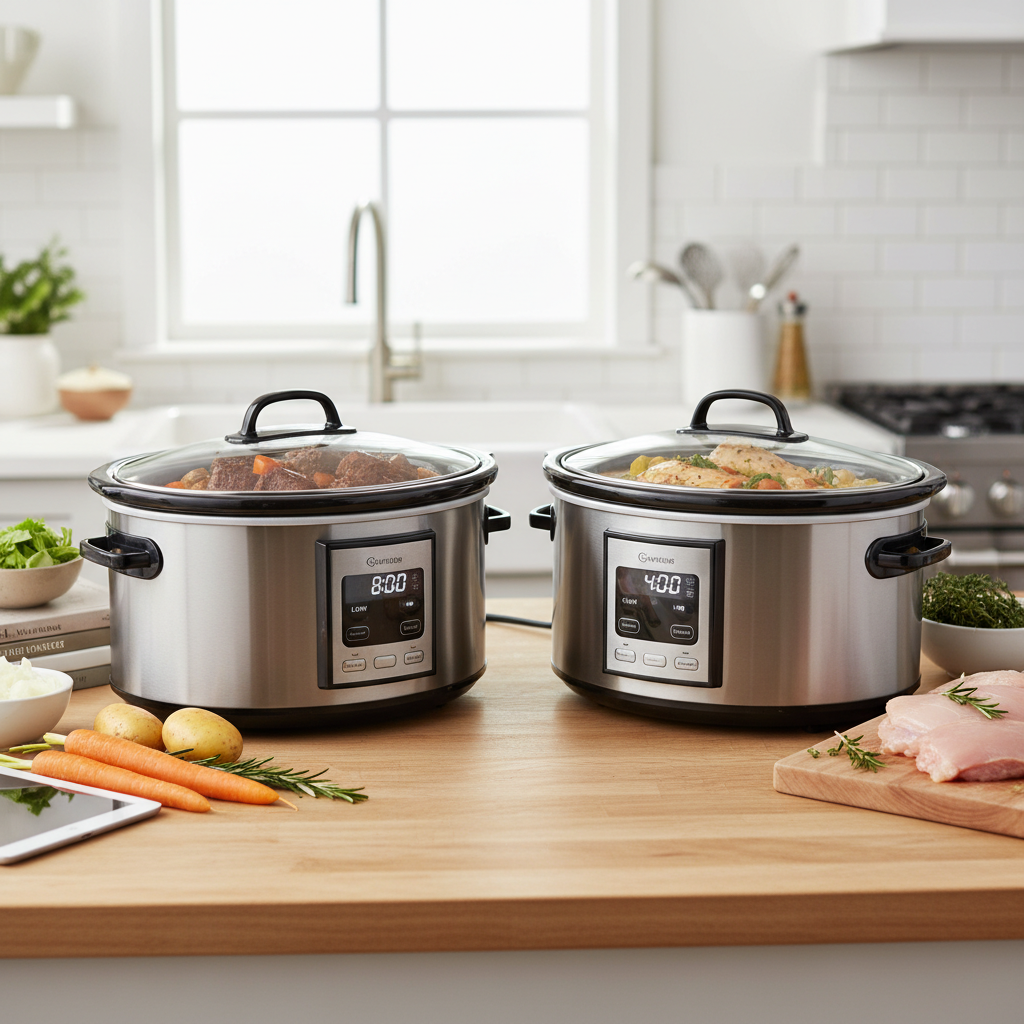
The allure of the slow cooker is undeniable: set it and forget it, returning hours later to a perfectly cooked, tender meal. Yet, many home cooks experience a common frustration—their slow cooker boils vigorously even on the “low” setting, leading to dried-out meats and mushy vegetables. This unexpected intensity can undermine the very purpose of slow cooking, turning a promise of culinary ease into a source of culinary distress. If you’ve ever wondered why your slow cooker seems to defy its gentle “low” setting, you’re not alone. This guide will uncover the reasons behind this boiling mystery and provide practical solutions to help you achieve the truly slow, even cooking your recipes deserve in 2026 and beyond.
Understanding Your Slow Cooker’s “Low” Setting
The term “low” on a slow cooker can be a bit misleading, as its meaning has evolved over the years. In many modern slow cookers, especially those with simpler controls, the distinction between “low” and “high” doesn’t necessarily refer to different ultimate temperatures. Instead, it often indicates the time it takes for the appliance to reach its target temperature. A “high” setting will bring the food to temperature more quickly, perhaps within an hour, while “low” might take two to four hours to reach the same temperature. Once that temperature is achieved, both settings might maintain a heat level that can result in simmering or even a gentle boil.
Typically, the “low” setting on a slow cooker aims for a temperature range between 190°F and 210°F (approximately 88°C to 99°C). For context, water boils at 212°F (100°C) at sea level. This means that even on “low,” your slow cooker is designed to operate very close to the boiling point. The goal is to keep food at a safe temperature (above 140°F / 60°C) for extended periods to prevent bacterial growth, a standard that manufacturers prioritize for food safety. This modern design contrasts with some older slow cookers, which were rumored to maintain a genuinely lower, sub-simmering heat, leading to the perception that newer models run hotter.
Common Reasons Your Slow Cooker Boils on Low
Several factors can contribute to your slow cooker reaching a rolling boil on its “low” setting, turning your gentle braise into a rapid cook. Understanding these can help you pinpoint the issue with your specific appliance and cooking habits.
The most significant factor often comes down to appliance design and evolving food safety standards. Over the years, regulations for slow cooker temperatures have shifted to ensure food reaches and stays at safe temperatures quickly to prevent foodborne illnesses. This means many contemporary slow cookers are engineered to run hotter than their vintage counterparts, making a vigorous simmer or light boil on “low” a normal, albeit sometimes undesirable, operational characteristic.
Another common culprit is underfilling the pot. If your slow cooker is less than two-thirds or three-quarters full, there’s less food mass to absorb and distribute the heat. This allows the liquid to heat up much faster and reach a more intense boil, effectively “overcooking” your meal in a shorter time than intended. The ideal fill level provides enough thermal mass to regulate the temperature more gently.
A tight-fitting lid also plays a role in heat retention. While a good seal is crucial for slow cooking efficiency, an exceptionally tight lid can trap almost all steam and heat within the pot, intensifying the internal temperature and accelerating the cooking process. This can easily push your “low” setting into a more aggressive boil.
Furthermore, altitude can influence boiling. At higher elevations, water boils at a lower temperature. If you live at a significant altitude, your slow cooker’s “low” setting might be designed for sea-level operation, causing it to boil more readily due to the reduced boiling point of water. Finally, the composition of your dish, particularly recipes heavy on liquids, can make boiling more apparent than in drier preparations.
The Impact of Overheating on Your Dishes
While a boil might seem like it’s “cooking faster,” it often works against the very benefits of slow cooking. Overheating can significantly degrade the quality of your meals, affecting both texture and flavor.
When a slow cooker boils on low, delicate ingredients like vegetables can become mushy and lose their structural integrity. Meats, instead of becoming fall-apart tender, can turn dry, stringy, or tough if cooked too aggressively, as the connective tissues break down too quickly or moisture is rapidly lost through steam. The nuanced flavors that develop over hours of gentle simmering often become muted or unbalanced when subjected to a harsher, boiling environment. Instead of a rich, melded taste, you might find your dish tasting “cooked” but lacking depth. Excessive boiling also leads to greater moisture loss through evaporation, even with a lid on, potentially leaving you with a drier meal than anticipated, or requiring more liquid than the recipe calls for.
Solutions and Fixes for an Overly Hot Slow Cooker
Dealing with an overly hot slow cooker requires a combination of smart usage and, in some cases, creative adjustments. Here are several strategies to help you achieve that ideal low and slow cook.
Optimize Your Usage
- Fill the Pot Adequately: Aim to fill your slow cooker at least two-thirds to three-quarters full. This increased thermal mass will help absorb the heat more effectively, preventing liquids from boiling too rapidly and promoting a more consistent, gentler cooking environment.
- Resist the Urge to Peek: Every time you lift the lid, you release a significant amount of accumulated heat and steam. This can drop the internal temperature by 10-20°F (5-10°C) and add up to 30 minutes to your cooking time as the slow cooker struggles to regain its heat. Keep the lid on to maintain a stable cooking temperature.
- Consider Starting on High, Then Switching: If you’re home and can monitor it, you might start your slow cooker on “high” for 30-60 minutes to bring the contents up to temperature quickly, then switch to “low” or even “warm” for the remainder of the cooking time. While “warm” is generally for holding food, some recipes might benefit from its extremely gentle heat after an initial cook.
|
Our Picks for the Best Slow cooker in 2026
As an Amazon Associate I earn from qualifying purchases.
|
||
| Num | Product | Action |
|---|---|---|
| 1 | Crock-Pot 7-Quart Manual Slow Cooker, Family Size Serves 8+ People or Fits 6-lb Roast, Removable Stoneware with Warming Setting, Dishwasher Safe for Easy Cleanup, Charcoal |

|
| 2 | Instant Pot Duo 7-in-1 Electric Pressure Cooker, Slow Cooker, Rice, Steamer, Sauté, Yogurt Maker, Warmer & Sterilizer, Includes App With Over 800 Recipes, Stainless Steel, 6 Quart |
|
| 3 | Crock-pot Express Crock Slow Cooker 8 quart Red |
|
| 4 | Sweetcrispy 16-in-1 Electric Pressure Cooker 6QT, 12-Preset Multi Cookers with Ceramic Pot, Slow Cook Rice Steamer Sauté Soup Yogurt Maker and More, Recipe Book |
|
| 5 | Crock-Pot 7 Quart Oval Manual Slow Cooker, Stainless Steel (SCV700-S-BR), Versatile Cookware for Large Families or Entertaining |
|
| 6 | Hamilton Beach 6-Quart Slow Cooker with 3 Cooking Settings, Dishwasher-Safe Stoneware Crock & Glass Lid, Silver (33665G) |
|
| 7 | Hamilton Beach Slow Cooker, Extra Large 10 Quart, Stay or Go Portable With Lid Lock, Dishwasher Safe Crock, Black (33195) |
|
| 8 | Crock-Pot Large 8-Quart Programmable Slow Cooker with Auto Warm Setting Black Stainless Steel |
|
| 9 | Crock-Pot 6 Quart Cook & Carry Programmable Slow Cooker with Digital Timer Stainless Steel (CPSCVC60LL-S) pack of 1 |
|
| 10 | Ninja® 12-in-1 PossibleCooker™ PLUS | 8.5-qt - Sous Vide & Proof Multi-Cooker | Slow Cooker, Dutch Oven & More | Glass Lid & Integrated Spoon | Nonstick | Oven Safe Pot to 500°F | Black | MC1010 |
|
DIY Temperature Control Hacks
For manual slow cookers without advanced settings, you might consider these DIY solutions:
- External Timer Switch: For older, simpler models, an external appliance timer can be a game-changer. By setting the slow cooker to cycle on and off (e.g., 30 minutes on, 15 minutes off), you can effectively reduce the average temperature and prevent aggressive boiling. Experimentation will be key to finding the right cycle for your specific unit and recipe.
- Metal Spacer Under the Ceramic Pot: Some users have experimented with placing a small metal spacer (like aluminum foil balls or a metal ring) between the heating element and the ceramic insert. The idea is to slightly lift the ceramic pot, creating a small air gap that reduces direct heat transfer. Exercise caution if attempting this, ensuring stability and safety.
“Many home cooks struggle with slow cooker temperatures because they expect a precise, oven-like setting. The reality is, ‘low’ aims for a simmering range, not a below-simmering one, which can be a paradigm shift for traditional recipes.” – Chef Anya Sharma, Culinary Innovator & Slow Cooking Expert
Choosing the Right Appliance (or When to Upgrade)
If your current slow cooker consistently overheats despite your best efforts, it might be time to consider an alternative or an upgrade.
- Look for “True Low” Models: Some brands, like specific KitchenAid slow cookers, have been praised for offering a genuinely lower temperature setting that avoids aggressive boiling. Researching user reviews specifically for “low temperature performance” can be helpful.
- Digital Slow Cookers: Modern digital slow cookers often offer more precise temperature control and programmable settings, which can include options for gentler heat or automatic switching to “warm” after cooking.
- Multi-Cookers with Slow Cook Function: Appliances like Instant Pots often include a slow cook function. While these can also run hot, some models provide more control over temperature settings (e.g., “less,” “normal,” “more” for slow cooking) than traditional slow cookers.
- Dutch Oven in a Conventional Oven: For unparalleled low and slow cooking, an enameled cast iron Dutch oven in a conventional oven set to a very low temperature (e.g., 225°F / 107°C) offers excellent heat distribution and moisture retention, mimicking the best aspects of traditional slow cooking without the risk of boiling.
Troubleshooting a Potentially Faulty Unit
While rare for new appliances, consistent boiling on low could indicate an issue with an older slow cooker. Ensure the power cord is securely connected and the control knob is functioning correctly. If you suspect a malfunction, such as a faulty thermostat or heating element, it’s best to contact the manufacturer’s support team for guidance.
Tips for Perfect Slow Cooking Results
Beyond managing temperature, a few general best practices can significantly improve your slow cooking experience:
- Layer Ingredients Properly: Place tougher, denser vegetables (like carrots and potatoes) at the bottom, closer to the heat source. Meats go next, followed by more delicate vegetables and liquids. This ensures everything cooks evenly.
- Adjust Liquids: Slow cookers retain a lot of moisture. Most recipes can benefit from a slight reduction in liquid compared to stovetop or oven recipes. If your dish consistently boils, reducing initial liquid might help.
- Monitor with a Meat Thermometer: While not always necessary, using a good quality meat thermometer can help you verify the internal temperature of your food, ensuring it’s safely cooked without being overdone.
Conclusion
The convenience of a slow cooker is undeniable, but encountering a “low” setting that boils can turn a simple meal into a culinary challenge. By understanding that many modern slow cookers operate at temperatures very close to boiling for food safety, and by recognizing factors like pot fill levels and lid seals, you can take control of your cooking. Whether you adjust your cooking habits, employ a clever DIY hack, or choose an appliance better suited to your needs, achieving perfectly tender, flavor-rich meals from your slow cooker is entirely within reach. Don’t let a boiling “low” setting deter you; embrace these fixes and reclaim the joy of truly slow cooking.
What’s your go-to slow cooker recipe, and what temperature tips have you found most helpful for it?
Frequently Asked Questions
Is it normal for a slow cooker to simmer on low?
Yes, it is often normal for a slow cooker to reach a simmer or gentle boil on the “low” setting, especially in modern models designed to maintain safe food temperatures. The “low” setting typically means it takes longer to reach that simmering temperature compared to the “high” setting.
What is the ideal temperature for “low” on a slow cooker?
The “low” setting on most slow cookers aims for a temperature range of approximately 190°F to 210°F (88°C to 99°C). This temperature is just below the boiling point of water (212°F / 100°C), allowing for extended cooking while keeping food safe.
Can I leave my slow cooker on “warm” all day?
While the “warm” setting is designed to keep cooked food at a safe serving temperature (typically around 145°F-165°F / 63°C-74°C), it is not usually hot enough to cook raw food. Leaving food on “warm” for extended periods beyond 2-4 hours is generally not recommended by food safety experts, as it can be a borderline temperature for bacterial growth.
How do I know if my slow cooker is too hot?
If your slow cooker liquid is at a rapid, rolling boil, rather than a gentle simmer, it is likely running too hot. Other signs include dry or tough meat, mushy vegetables, or food cooking much faster than the recipe specifies for the “low” setting.
Are older slow cookers better for true low cooking?
Many long-time slow cooker users report that older models often had a “true low” setting that maintained a lower, sub-simmering temperature, leading to less aggressive cooking. Modern slow cookers, influenced by updated food safety guidelines, tend to run hotter on both “low” and “high” settings to ensure food reaches safe temperatures quickly.