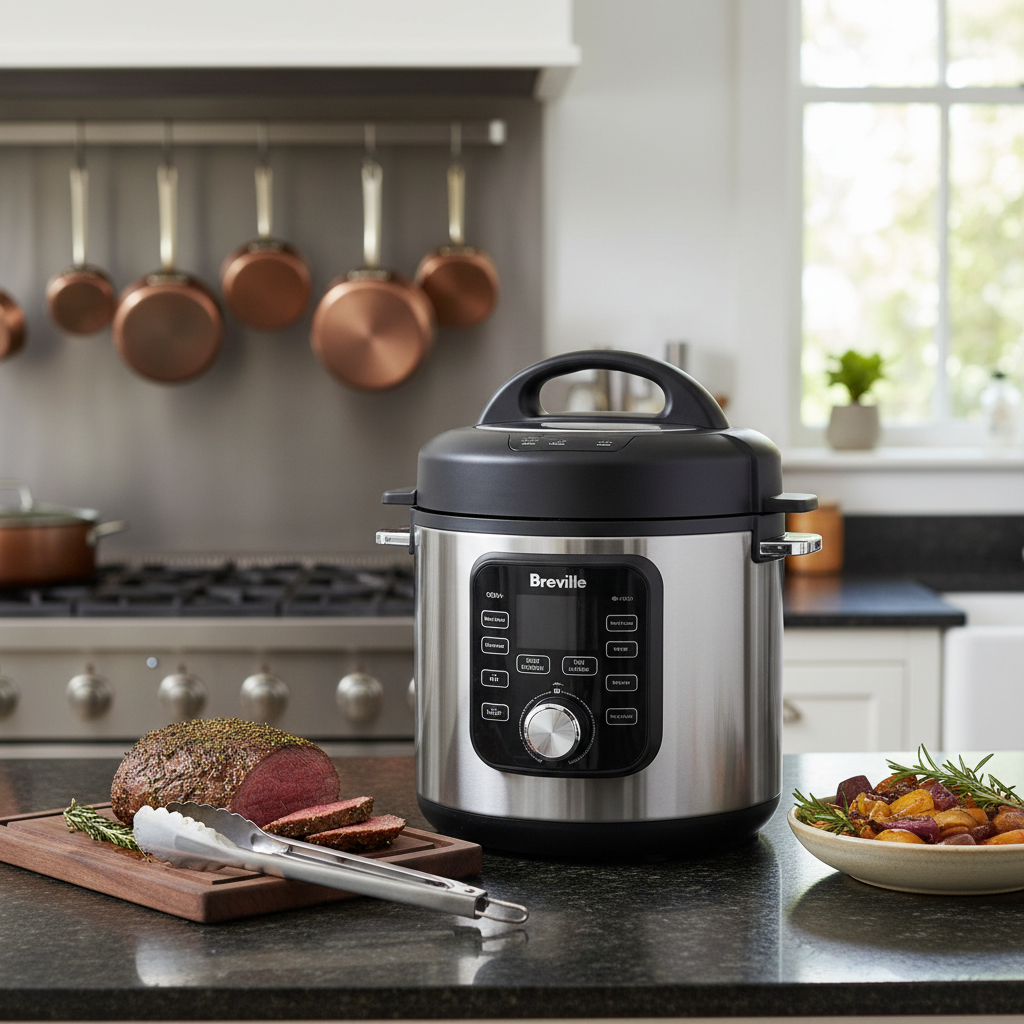
Slow cookers have revolutionized meal preparation, offering the convenience of “set it and forget it” cooking that delivers tender, flavorful dishes with minimal effort. But beyond the ease, a critical aspect of slow cooking is ensuring your appliance maintains safe and consistent temperatures. An inaccurate slow cooker can pose risks to food safety, turning your culinary convenience into a potential health hazard. Understanding how to properly test your slow cooker’s temperature accuracy is paramount for peace of mind and delicious, worry-free meals.
This comprehensive guide will walk you through why temperature accuracy matters, what tools you’ll need, and a simple, effective method to test your slow cooker’s performance. By the end, you’ll be equipped to verify that your appliance is reliably keeping your food out of the danger zone and cooking it to perfection every time. Let’s ensure your slow cooker is a trusted kitchen companion.
Understanding Slow Cooker Temperatures and Food Safety
A slow cooker’s primary function is to cook food slowly at low temperatures over an extended period. This process not only tenderizes ingredients but also effectively destroys harmful bacteria, provided the appliance reaches and maintains adequate heat.
The critical concept in food safety is the “danger zone,” which spans temperatures between 40°F and 140°F (4°C and 60°C). Within this range, bacteria can multiply rapidly, potentially leading to foodborne illness. A safe slow cooker must heat food quickly enough to pass through this zone and then hold it at a temperature that inhibits bacterial growth and ensures thorough cooking. Generally, slow cookers operate on a “low” setting between approximately 170°F and 200°F (77°C and 93°C) and on a “high” setting between 212°F and 300°F (100°C and 149°C). The “warm” setting, typically used for holding cooked food, should maintain temperatures above 140°F (60°C) to keep food safe until serving.
Why Testing Your Slow Cooker’s Temperature Is Crucial
Regularly testing your slow cooker’s temperature accuracy is a vital practice for several reasons, extending beyond mere cooking performance to the core of kitchen safety.
Firstly, it’s about preventing foodborne illness. If your slow cooker runs too cool, food may linger in the bacterial danger zone for too long, allowing harmful pathogens to multiply to dangerous levels. Conversely, while less common, a cooker that runs excessively hot might scorch food or dry it out prematurely, though it rarely compromises safety from a bacterial standpoint if temperatures are consistently above 140°F.
Secondly, ensuring even cooking and optimal results depends on consistent heat. Slow cookers are designed to gently break down tough cuts of meat and meld flavors over hours. If the temperature fluctuates widely or is simply incorrect, dishes may turn out undercooked, tough, or with an undesirable texture.
Finally, knowing when to test is as important as knowing how. It’s highly recommended to test a brand-new slow cooker to establish a baseline, or an older appliance that may experience wear and tear over time. Any time you suspect performance issues, such as food consistently taking longer to cook, appearing undercooked, or exhibiting unusual textures, a temperature check is a must. This proactive approach helps identify problems before they impact your health or your culinary creations.
Essential Tools for Accurate Temperature Testing
Before you begin testing, you’ll need a few key tools to ensure your results are reliable. The most crucial item is an accurate food thermometer.
Reliable Food Thermometer: An instant-read digital thermometer or a probe thermometer is ideal for this task. Instant-read thermometers provide quick readings, which is essential given that temperatures in a slow cooker can drop rapidly once the lid is removed. Probe thermometers, often with a wire that allows the probe to stay in the food while the unit is outside the cooker, offer continuous monitoring, though for this specific test, a quick instant reading is usually sufficient. Avoid using dial-type meat thermometers unless you’ve specifically calibrated them and are confident in their accuracy, as they can often be less precise.
Importance of a Calibrated Thermometer: Even the best thermometers can lose accuracy over time. To ensure your testing results are truly meaningful, your food thermometer itself must be calibrated.
How to Calibrate Your Food Thermometer (Ice Bath Method)
|
Our Picks for the Best Slow cooker in 2026
As an Amazon Associate I earn from qualifying purchases.
|
||
| Num | Product | Action |
|---|---|---|
| 1 | Sweetcrispy 16-in-1 Electric Pressure Cooker 6QT, 12-Preset Multi Cookers with Ceramic Pot, Slow Cook Rice Steamer Sauté Soup Yogurt Maker and More, Recipe Book |

|
| 2 | Crock-pot Express Crock Slow Cooker 8 quart Red |
|
| 3 | Crock-Pot 6 Quart Cook & Carry Programmable Slow Cooker with Digital Timer Stainless Steel (CPSCVC60LL-S) pack of 1 |
|
| 4 | Hamilton Beach 6-Quart Slow Cooker with 3 Cooking Settings, Dishwasher-Safe Stoneware Crock & Glass Lid, Silver (33665G) |
|
| 5 | Hamilton Beach Slow Cooker, Extra Large 10 Quart, Stay or Go Portable With Lid Lock, Dishwasher Safe Crock, Black (33195) |
|
| 6 | Crock-Pot Large 8-Quart Programmable Slow Cooker with Auto Warm Setting Black Stainless Steel |
|
| 7 | Crock-Pot 7-Quart Manual Slow Cooker, Family Size Serves 8+ People or Fits 6-lb Roast, Removable Stoneware with Warming Setting, Dishwasher Safe for Easy Cleanup, Charcoal |
|
| 8 | Instant Pot Duo 7-in-1 Electric Pressure Cooker, Slow Cooker, Rice, Steamer, Sauté, Yogurt Maker, Warmer & Sterilizer, Includes App With Over 800 Recipes, Stainless Steel, 6 Quart |
|
| 9 | Ninja® 12-in-1 PossibleCooker™ PLUS | 8.5-qt - Sous Vide & Proof Multi-Cooker | Slow Cooker, Dutch Oven & More | Glass Lid & Integrated Spoon | Nonstick | Oven Safe Pot to 500°F | Black | MC1010 |
|
| 10 | Crock-Pot 7 Quart Oval Manual Slow Cooker, Stainless Steel (SCV700-S-BR), Versatile Cookware for Large Families or Entertaining |
|
A simple and effective way to calibrate most food thermometers is using an ice bath:
- Prepare an ice bath: Fill a large glass or container with crushed ice, then add cold tap water until the container is full. Stir the mixture well and let it sit for a few minutes.
- Insert the thermometer: Place the stem of your thermometer into the ice bath, ensuring the tip is submerged at least 2 inches deep and not touching the bottom or sides of the container.
- Wait for the reading: Allow the thermometer to stabilize for a few minutes. An accurately calibrated thermometer should read 32°F (0°C).
- Adjust if necessary: If your thermometer reads above or below 32°F (0°C), consult its instruction manual for calibration steps. Many digital thermometers have a reset button, while some older dial thermometers have a nut under the dial that can be turned with a wrench to adjust the needle.
By starting with a calibrated thermometer, you ensure that any temperature inaccuracies you discover are from your slow cooker, not your testing equipment.
Step-by-Step Guide: Testing Your Slow Cooker’s Low Setting Accuracy
The “low” setting is the most frequently used and critical for ensuring food safety over long cooking periods. This test focuses on verifying its performance.
-
Preparation:
- Fill the slow cooker: Fill your slow cooker with plain tap water, approximately 1/2 to 2/3 full. For many standard-sized slow cookers, this equates to about 2 quarts (8 cups) of water.
- Secure the lid: Place the lid securely on the slow cooker.
-
Heating Time:
- Set to LOW: Turn your slow cooker to the “LOW” setting.
- Cook for 8 hours: Allow the slow cooker to heat on the “LOW” setting for a full eight hours. It is crucial not to lift the lid during this period, as doing so can cause a significant temperature drop (10-15°F or 5-8°C) and skew your results.
-
Taking the Reading:
- Act quickly: After eight hours, immediately and carefully lift the lid just enough to insert your calibrated food thermometer.
- Measure multiple spots: Insert the thermometer probe into the water, ensuring the tip is submerged but not touching the bottom or sides of the stoneware insert. Take readings in several different spots to get an average.
- Note the temperature: Record the temperature reading as quickly as possible.
-
Interpreting Results:
- Safe Range: For the “LOW” setting, the water temperature should ideally measure between 185°F and 200°F (85°C and 93°C). Many food safety experts recommend a minimum of 185°F (85°C).
- If too low: If your slow cooker consistently reads below 185°F (e.g., 180°F or lower), it indicates that your appliance may not be heating food adequately to avoid the bacterial danger zone. In this scenario, for safety reasons, your slow cooker should be replaced. If it’s a newer model, consider contacting the manufacturer regarding a warranty claim.
- If too high: If the temperature is consistently above 200°F (93°C), your slow cooker is likely safe from a bacterial standpoint but may overcook or dry out your food more quickly than expected. You might need to adjust cooking times for recipes or monitor your food more closely.
Performing this test periodically, especially for older appliances, will give you confidence in your slow cooker’s ability to prepare safe and delicious meals.
Understanding High and Warm Settings
While the “low” setting test is paramount for food safety, you can also perform similar tests for your slow cooker’s “high” and “warm” settings to fully understand its performance.
High Setting:
To test the “high” setting, fill the slow cooker as before (1/2 to 2/3 full with water) and set it to “HIGH.” Most slow cookers reach their stable “high” temperature within 3-4 hours. After this time, quickly check the water temperature with your calibrated thermometer. Depending on the model, you can expect the temperature to range from approximately 212°F to 300°F (100°C to 149°C). Some manufacturers report that both “high” and “low” settings stabilize around 209°F, with “high” simply reaching that temperature faster. If your “high” setting is consistently below the boiling point (212°F) after several hours, it may indicate a performance issue.
Warm Setting:
The “warm” setting is designed to keep cooked food at a safe serving temperature without continuing to cook it. To test this, you can let your slow cooker run on “high” or “low” for a few hours until the water is hot, then switch it to the “warm” setting. After an hour or two, quickly check the water temperature. The “warm” setting should maintain food temperatures above 140°F (60°C) to prevent bacterial growth. If your “warm” setting drops below this threshold, it is not safely holding food and should not be relied upon for extended periods. Be aware that some older or specific models might run surprisingly hot on “warm,” sometimes even hotter than their “low” setting, which could overcook food if left too long.
Understanding these temperature ranges across all settings helps you tailor recipes and cooking times more effectively and ensures your appliance is performing as expected for all your culinary needs.
Maintaining Your Slow Cooker for Optimal Performance and Safety
Ensuring your slow cooker maintains accurate temperatures is an ongoing commitment that involves proper use and regular maintenance. A well-cared-for appliance is a safer and more efficient one.
Regular Cleaning: Always clean your slow cooker thoroughly after each use. Food residue can build up, potentially affecting heat transfer and creating hygiene issues. The stoneware insert and lid are typically dishwasher-safe, but always check your manufacturer’s instructions. Wipe down the heating base with a damp cloth, ensuring no water gets into electrical components.
Inspecting for Damage: Before each use, quickly inspect your slow cooker for any signs of wear or damage. Check the power cord for fraying or cuts, and the plug for bent prongs. Examine the stoneware insert for cracks, which could lead to uneven heating or leakage. Ensure the lid fits snugly; a loose-fitting lid allows steam and heat to escape, impacting cooking temperature and efficiency. Any significant damage, especially to electrical components or the cooking vessel, warrants replacement.
Proper Use Practices for Consistent Heat:
- Thaw Food Completely: Always ensure meat and poultry are fully thawed before placing them in the slow cooker. Adding frozen food can drastically lower the initial cooking temperature, extending the time food spends in the danger zone.
- Fill Levels: Aim to fill your slow cooker at least half full, but no more than three-quarters full. Under-filling can cause food to cook too quickly or scorch, while overfilling can lead to uneven cooking and spillage.
- Avoid Lifting the Lid: Resist the temptation to lift the lid frequently during cooking. Each time you remove the lid, the internal temperature can drop significantly, requiring the appliance to work harder and longer to regain lost heat. This directly impacts cooking efficiency and food safety.
- Reheating Foods: The slow cooker is not designed for reheating leftovers. Reheat cooked food rapidly on a stovetop, in a microwave, or a conventional oven until it reaches 165°F (74°C), then transfer it to a preheated slow cooker set to “warm” if you need to keep it hot for serving.
When to Consider Replacement: Beyond the specific temperature test, if your slow cooker is very old, shows visible signs of deterioration, or consistently fails to meet expected cooking times and results despite proper usage, it might be time for a replacement. Investing in a new, reliable slow cooker is a small price to pay for the assurance of safe and delicious meals for your family.
Conclusion
The convenience of a slow cooker is undeniable, transforming everyday cooking into an effortless experience. However, this convenience must always be balanced with an unwavering commitment to food safety. Regularly testing your slow cooker’s temperature accuracy, especially on the critical “low” setting, is a simple yet profoundly important step in ensuring your appliance is a safe and reliable kitchen partner.
By using a calibrated thermometer and following our straightforward testing guide, you can quickly determine if your slow cooker maintains the necessary temperatures to keep harmful bacteria at bay. Remember that an appliance that consistently reads below 185°F (85°C) on low should be replaced to prevent foodborne illness. Embrace these checks as part of your routine kitchen maintenance, alongside proper cleaning and usage. This proactive approach will empower you to enjoy all the benefits of slow cooking with complete confidence, knowing every meal you prepare is both delicious and safe. When was the last time you checked your slow cooker’s temperature?
Frequently Asked Questions
What is the safe temperature range for slow cooking?
The safe temperature range for slow cooking is generally above 140°F (60°C) to prevent bacterial growth. For the “low” setting, most experts recommend that the food temperature reach between 185°F and 200°F (85°C and 93°C) after several hours of cooking to ensure safety and thorough cooking.
How often should I test my slow cooker’s temperature?
It is advisable to test your slow cooker’s temperature accuracy when you first purchase it, and then periodically, especially if it’s an older model (e.g., annually or every few years). You should also test it immediately if you notice any changes in cooking performance or suspect it’s not heating properly.
Can I test my slow cooker without a specialized food thermometer?
While an accurate food thermometer is highly recommended for precise results, you can use a basic kitchen thermometer if it can measure temperatures up to 200°F (93°C). However, ensure it’s calibrated first (using the ice bath method) to guarantee its accuracy, as unreliable readings can give a false sense of security.
What should I do if my slow cooker runs too hot?
If your slow cooker runs too hot (e.g., consistently above 200°F on the “low” setting), it’s generally safe from a bacterial standpoint, but it might overcook your food. You may need to adjust cooking times, add more liquid, or monitor recipes more closely to prevent dishes from drying out or scorching.
Is it safe to leave a slow cooker on overnight?
Yes, it is generally safe to leave a slow cooker on overnight or while you’re away from home, provided it is functioning correctly and maintaining safe temperatures. Ensure it is placed on a stable, heat-resistant surface away from flammable materials, and that its cord is in good condition.
Can a slow cooker cook frozen meat?
No, it is not recommended to cook frozen meat or poultry directly in a slow cooker. Frozen food can keep the internal temperature of the slow cooker below 140°F (60°C) for too long, allowing bacteria to multiply to dangerous levels. Always thaw meat completely in the refrigerator before placing it in the slow cooker.