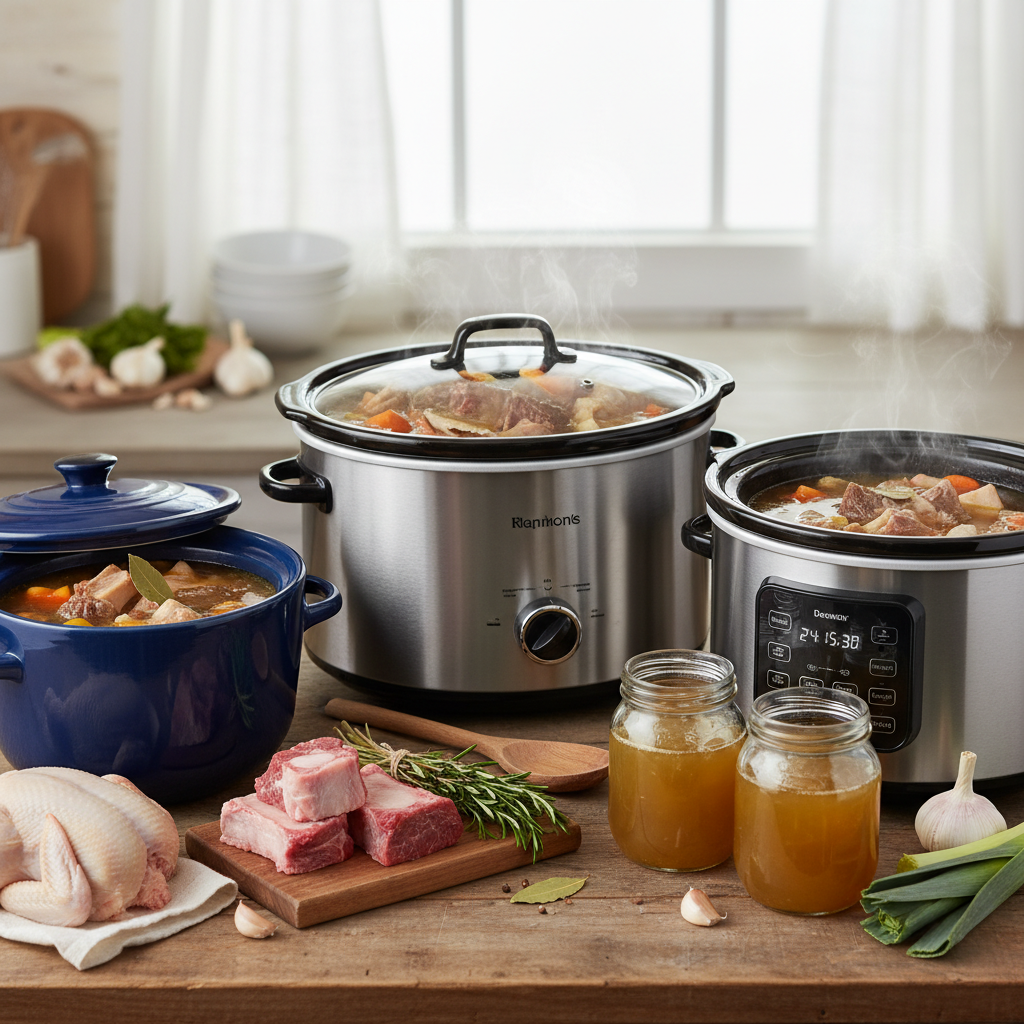
Crafting nutrient-rich bone broth requires patience and the right tools. While many cooking methods exist, the humble slow cooker stands out as an indispensable kitchen companion for achieving a deeply flavored, gelatinous bone broth that simmers for 24 hours or even longer. If you’ve ever dreamt of waking up to the rich aroma of homemade broth, this guide will help you navigate the world of slow cookers to find the perfect match for your extended brewing needs.
The Enduring Charm of Slow Cookers for Bone Broth
A slow cooker, often referred to by the brand name Crock-Pot, is an electric cooking appliance that simmers food at a low temperature for several hours. Its primary function is to cook food slowly and evenly, making it ideal for tenderizing tougher cuts of meat, developing complex flavors in stews, and, most notably, extracting maximum nutrients from bones for broth.
The history of slow cooking traces back to simpler methods of cooking food over low heat for extended periods, but the modern electric slow cooker revolutionized this concept, bringing convenience and safety to kitchens worldwide. Today, slow cookers come in various forms, from basic manual models with simple “low” and “high” settings to advanced digital versions offering programmable timers and “keep warm” functions. Some modern appliances, known as multi-cookers, even combine slow cooking with other functions like pressure cooking, sautéing, and steaming.
For bone broth, the slow cooker’s consistent, low heat is paramount. This gentle heat prevents rapid boiling, which can emulsify fats and lead to a cloudy or bitter broth. Instead, it slowly breaks down collagen into gelatin and coaxes essential minerals and amino acids from the bones into the liquid, resulting in a nutrient-dense and flavorful concoction. This process often takes anywhere from 12 to 24 hours, with many enthusiasts advocating for even longer cooking times to achieve the richest results.
Unlocking Nutritional Power: Benefits of Extended Slow Cooking
The dedication to long, slow cooking for bone broth isn’t just a tradition; it’s a practice rooted in maximizing nutritional benefits and flavor. Here’s why extending your bone broth’s simmer time in a slow cooker for 24 hours or more is so advantageous:
- Time and Effort Saving: Despite the long cooking duration, slow cookers offer unparalleled convenience. You can simply add your ingredients, set the temperature to low, and largely “set it and forget it,” allowing the broth to cook overnight or while you’re away. This hands-off approach makes daily consumption of homemade broth a realistic goal for busy individuals.
- Optimal Nutrient Extraction: The prolonged, low-temperature cooking in a slow cooker is crucial for breaking down connective tissues and cartilage in bones, releasing beneficial compounds like collagen, gelatin, glucosamine, chondroitin, and a spectrum of essential minerals (calcium, magnesium, phosphorus, potassium). The longer the bones simmer, the more thoroughly these compounds are extracted into the broth, leading to a more potent and healing elixir.
- Enhanced Flavor Development: Extended simmering allows flavors to deepen and meld, creating a richer, more robust broth. This lengthy process transforms simple ingredients into a complex, savory liquid that forms an excellent base for soups, stews, or a comforting drink on its own.
- Versatility Beyond Broth: While our focus is bone broth, the same slow cooker can be used for a myriad of other dishes. From tender pulled meats and hearty stews to chili and even some desserts, a reliable slow cooker is a versatile appliance that can handle diverse culinary tasks, making it a valuable addition to any kitchen.
- Safety and Ease of Use: Modern slow cookers are designed for safe, unattended operation over many hours. Many models include automatic “keep warm” settings or timers that automatically switch off the cooking element once the set time is complete, providing peace of mind for those long cooking sessions. However, it is essential to ensure your slow cooker reaches at least 140°F (60°C) within two hours to prevent bacterial growth, especially when cooking raw meat.
Key Considerations for a 24-Hour+ Bone Broth Slow Cooker
Selecting the right slow cooker for prolonged bone broth cooking involves more than just picking a popular brand. Certain features become critical when aiming for a 24-hour or longer simmer.
Comparison Table: Slow Cooker Types for Bone Broth
|
Our Picks for the Best Slow cooker in 2026
As an Amazon Associate I earn from qualifying purchases.
|
||
| Num | Product | Action |
|---|---|---|
| 1 | Ninja® 12-in-1 PossibleCooker™ PLUS | 8.5-qt - Sous Vide & Proof Multi-Cooker | Slow Cooker, Dutch Oven & More | Glass Lid & Integrated Spoon | Nonstick | Oven Safe Pot to 500°F | Black | MC1010 |

|
| 2 | Hamilton Beach 6-Quart Slow Cooker with 3 Cooking Settings, Dishwasher-Safe Stoneware Crock & Glass Lid, Silver (33665G) |
|
| 3 | Crock-Pot Large 8-Quart Programmable Slow Cooker with Auto Warm Setting Black Stainless Steel |
|
| 4 | Sweetcrispy 16-in-1 Electric Pressure Cooker 6QT, 12-Preset Multi Cookers with Ceramic Pot, Slow Cook Rice Steamer Sauté Soup Yogurt Maker and More, Recipe Book |
|
| 5 | Crock-Pot 7 Quart Oval Manual Slow Cooker, Stainless Steel (SCV700-S-BR), Versatile Cookware for Large Families or Entertaining |
|
| 6 | Crock-Pot 7-Quart Manual Slow Cooker, Family Size Serves 8+ People or Fits 6-lb Roast, Removable Stoneware with Warming Setting, Dishwasher Safe for Easy Cleanup, Charcoal |
|
| 7 | Crock-pot Express Crock Slow Cooker 8 quart Red |
|
| 8 | Crock-Pot 6 Quart Cook & Carry Programmable Slow Cooker with Digital Timer Stainless Steel (CPSCVC60LL-S) pack of 1 |
|
| 9 | Hamilton Beach Slow Cooker, Extra Large 10 Quart, Stay or Go Portable With Lid Lock, Dishwasher Safe Crock, Black (33195) |
|
| 10 | Instant Pot Duo 7-in-1 Electric Pressure Cooker, Slow Cooker, Rice, Steamer, Sauté, Yogurt Maker, Warmer & Sterilizer, Includes App With Over 800 Recipes, Stainless Steel, 6 Quart |
|
| Feature / Type | Manual Slow Cooker | Digital Programmable Slow Cooker | Multi-Cooker (with Slow Cook function) | Clay Pot Slow Cooker (e.g., VitaClay) |
|---|---|---|---|---|
| Capacity | Typically 4-8 quarts. | Commonly 6-8 quarts, up to 10 quarts. | Often 6-8 quarts. | Usually 4-6 quarts. |
| Temperature Control | Basic Low, High, Warm settings (manual switching). | Precise time settings (up to 20 hours), auto Keep Warm. | Digital control, various modes (including slow cook), some with exact temperature settings. | Natural clay material, often with specific settings for broth/yogurt, excellent heat retention. |
| Lid Security | Standard glass lid, some with clips. | Often features locking lids for transport and better seal. | Pressure sealing lids (in pressure cook mode), standard for slow cook. | Unblazed clay lids designed for gentle steam circulation and flavor retention. |
| Evaporation Rates | Can vary, may require monitoring and adding liquid. | Generally good, models like Crock-Pot SCCPVL610 show low evaporation (5% on low for 4 hours). | Varies by model; pressure cooking minimizes evaporation, slow cook mode is similar to traditional slow cookers. | Excellent for moisture retention due to the nature of clay, less need to add water. |
| Material | Ceramic or stoneware insert. | Ceramic, stoneware, or nonstick metal insert. | Stainless steel insert (often with nonstick coating). | Unblazed Zisha clay or other natural clays; aluminum and lead-free. |
| Price Tier | Budget-friendly. | Mid-range to Premium. | Mid-range to Premium. | Mid-range to Premium. |
When cooking bone broth for over 24 hours, the ability of a slow cooker to maintain a consistent low temperature without overcooking or excessive evaporation is paramount. Models with digital controls that allow precise time settings and automatically switch to a “keep warm” function are highly beneficial for safety and convenience. Furthermore, a well-sealing lid is crucial to minimize liquid loss, ensuring you end up with a rich, concentrated broth rather than a dried-out mess. Some models have been tested for their evaporation rates, showing that digital cookers like the Crock-Pot SCCPVL610 perform very well, losing minimal water over several hours on a low setting.
Your Ultimate Buying Guide: Choosing the Right Slow Cooker
Choosing the perfect slow cooker for your bone broth journey means considering your lifestyle, cooking habits, and specific needs.
-
Determine Your Needs:
- Batch Size: How much broth do you want to make at once? For a single person, a 4-quart cooker might suffice, but for families or those who want to freeze large batches, a 6-quart or even 8-10 quart capacity is more practical. Larger volumes are generally better for 24+ hour bone broth, as they allow for more bones and water, reducing the chance of drying out.
- Cooking Frequency: If you plan to make bone broth regularly, investing in a durable and efficient model will pay off.
-
Select the Right Capacity: For making bone broth for 24 hours or longer, a 6-quart to 10-quart slow cooker is generally recommended. A 6-quart size is considered versatile for most families, while larger sizes like 7 or 8 quarts accommodate more bones and water, which is beneficial for extended cooking times.
-
Prioritize Quality Materials:
- Ceramic or Stoneware: These are traditional and excellent for even heat distribution and retention. They are often dishwasher-safe for easy cleanup.
- Clay Pots: Unblazed clay pot slow cookers, such as those from VitaClay, are celebrated for their ability to retain flavor, enzymes, and nutrients, while also being free from aluminum and lead. This makes them a strong contender for nutrient-focused bone broth.
- Nonstick Metal: Some modern slow cookers feature nonstick metal inserts which can be lighter and easier to clean. Ensure they are made from food-safe materials.
-
Consider Essential Features for Extended Cooking:
- Programmable Timer: A digital timer that allows you to set the precise cooking duration (e.g., 24 hours) is a must-have.
- Automatic Keep-Warm Function: This feature automatically switches the cooker to a warming mode once the cooking cycle is complete, ensuring your broth stays at a safe serving temperature without continuing to cook.
- Secure Lid: A tightly fitting lid minimizes evaporation, which is crucial for long cooking times to prevent your broth from reducing too much or burning. Some models offer locking lids for secure transport, which can also contribute to a better seal during cooking (though generally, locking lids should not be engaged during the cooking process itself due to potential pressure buildup).
- Even Heating: Look for reviews that highlight consistent and even heating performance to avoid hot spots that can scorch the broth.
- Low Evaporation Rate: Models that demonstrate low water loss during testing are highly desirable for 24-hour+ cooking. The Crock-Pot SCCPVL610, for example, shows excellent moisture retention.
-
Evaluate Brand Reputation and Warranty: Opt for reputable brands known for durability and good customer service. A solid warranty provides peace of mind for your investment.
-
Set Your Budget: Slow cookers are available at various price points. Manual models are more affordable, while digital and multi-functional units, especially premium brands, will be pricier. Determine what features are essential versus nice-to-have based on your budget.
Top Picks: Slow Cookers Mastered for 24+ Hour Bone Broth
Based on their features, performance, and suitability for extended, low-heat cooking, here are some top slow cooker models ideal for making bone broth for 24 hours or more:
- VitaClay VM7900-6 Smart Organic Multi-Cooker: This unique appliance stands out for its unglazed clay pot, which is lauded for its ability to retain natural flavors and nutrients, and is free from aluminum and lead. It offers a wide range of temperatures and can handle long cooking durations, making it an excellent choice for a pure, flavorful bone broth.
- Crock-Pot SCCPVL610 Cooker & Steamer (6-Quart): This digital slow cooker is highly recommended for its automatic keep-warm setting and anti-spill locking lid, which helps with transportation and maintaining a good seal during cooking. Its performance in evaporation tests is impressive, showing minimal water loss, making it reliable for prolonged simmering without drying out. You can program the timer for up to 20 hours, and it automatically switches to warm afterward.
- All-Clad Gourmet Plus 7-Quart Slow Cooker: Considered a premium option, the All-Clad Gourmet Plus delivers top-notch cooking performance with even heat distribution. It boasts a digital interface, can brown and sear ingredients directly in the pot, and maintains consistent temperatures, ensuring ultra-tender results. Its 7-quart capacity is generous for larger bone broth batches.
- Hamilton Beach Set & Forget Programmable Slow Cooker (6-Quart): This programmable slow cooker offers convenient features for extended cooking, including a temperature probe to cook to a precise internal temperature and a ‘keep warm’ setting. The clip-on lid is also a practical feature for minimizing evaporation during long cooking sessions.
- Nesco SC-6-25 Slow Cooker (6-Quart): For those seeking a more basic yet effective option, the Nesco SC-6-25 is an affordable manual slow cooker with three heat settings (low, high, and warm). It performs very well in evaporation tests, losing only 4% moisture when on low for four hours, indicating its suitability for long, slow cooks without significant liquid loss. While it requires manual switching to the warm setting, its reliability for gentle simmering is a strong asset.
Each of these models offers unique benefits, but all provide the steady, low-heat environment crucial for extracting the rich gelatin and nutrients from bones over 24 hours or more.
Mastering Your Slow Cooker: Tips for Perfect Bone Broth & Care
Achieving the perfect 24-hour+ bone broth is an art, but with these tips, you’ll be well on your way to culinary success and mindful maintenance of your slow cooker.
Usage Tips for Nutrient-Rich Bone Broth:
- Prepare Your Bones: Use a variety of bones, including marrow bones, knuckle bones, and feet (chicken feet are excellent for gelatin). If using cooked bones, ensure any excess meat is removed. For a richer flavor, consider roasting bones beforehand.
- The Acid Advantage: Add a splash of apple cider vinegar (about 1/4 cup for a 6-quart pot) or lemon juice to your water. The acid helps to draw out essential minerals and collagen from the bones.
- Fill Appropriately: Cover your bones and any chosen vegetables (like carrot peels, onion ends, celery tops, garlic skins) with filtered water, leaving about an inch or two of headspace from the rim to prevent boiling over and ensure proper circulation.
- “Low and Slow” is Key: Always use the “low” setting for bone broth. This maintains a gentle simmer, which is crucial for nutrient extraction and achieving a clear, flavorful broth without scorching or developing a bitter taste.
- Monitor Water Levels: For cooks extending beyond 24 hours, especially if your slow cooker’s lid isn’t perfectly sealed, you might need to check and replenish the water level periodically to prevent evaporation and potential burning.
- Season at the End: Avoid adding salt or other intense seasonings at the beginning of the long cooking process. As the broth reduces, flavors concentrate, and you might end up with an overly salty broth. Season your broth to taste after it’s finished cooking and strained.
- Cool and Strain Correctly: Once cooking is complete, allow the broth to cool before straining out the bones and vegetables using a fine-mesh strainer. Cool the broth uncovered in the refrigerator. A layer of fat may solidify on top, which can be skimmed off and saved as a cooking fat, or stirred back in.
- Proper Storage: Store homemade broth in airtight containers or mason jars in the refrigerator for up to 7 days. For longer storage, freeze it in desired portions (e.g., 2-4 cup freezer bags or mason jars, leaving headspace if freezing in glass) for up to 6 months.
Slow Cooker Safety and Maintenance:
- Unattended Use: Modern slow cookers are generally safe to leave unattended, but always ensure it’s on a flat, stable surface away from combustible materials. Avoid anything touching the exterior, as it can get very hot.
- Temperature Changes: Prevent exposing the ceramic or stoneware insert to extreme temperature changes (e.g., placing frozen meat directly into a hot crock), as this can cause cracking.
- Cleaning: Most slow cooker inserts and lids are dishwasher-safe, making cleanup easy. For stubborn residue, soak the insert with warm, soapy water. Always refer to your appliance’s instruction manual for specific care guidelines.
- Lid During Cooking: While some lids clip for transport, avoid locking the lid during the cooking process itself, as this can build pressure in models not designed for it.
Conclusion
Embracing the slow cooker for your bone broth endeavors, especially for those coveted 24-hour+ simmering sessions, is a journey into flavor, nutrition, and remarkable convenience. By selecting a model with appropriate capacity, reliable low-heat settings, and good evaporation control, you empower yourself to consistently create deeply nourishing, gelatinous broths that form a cornerstone of a healthy kitchen. Whether you opt for a traditional ceramic crock or explore innovative clay pot options, the right slow cooker transforms bones and humble ingredients into liquid gold. So, are you ready to unlock the full potential of your kitchen and experience the profound benefits of homemade, long-simmered bone broth?
Frequently Asked Questions
Is it safe to cook bone broth for 24 hours in a slow cooker?
Yes, it is generally safe to cook bone broth for 24 hours (or even longer) in a slow cooker, provided the appliance is functioning correctly and maintains a consistent low temperature. Modern slow cookers are designed for extended, unattended cooking at safe temperatures. Ensure the slow cooker reaches at least 140°F (60°C) within two hours to prevent bacterial growth, and check the water level periodically to avoid drying out, especially for very long cooks.
What size slow cooker do I need for bone broth?
For making bone broth, a slow cooker with a capacity of 6 to 10 quarts is typically recommended. A 6-quart model is versatile for most families, while an 8-quart or larger capacity allows for more bones and water, which is ideal for maximizing nutrient extraction and managing evaporation during 24-hour+ cooking.
Should I add apple cider vinegar to bone broth?
Adding a small amount of apple cider vinegar (or lemon juice) to your bone broth ingredients is highly recommended. The acidity helps to break down the connective tissues and draw out essential minerals, collagen, and other beneficial compounds from the bones into the broth, significantly enhancing its nutritional value.
Can I leave my slow cooker on overnight?
Yes, you can safely leave your slow cooker on overnight, particularly when making bone broth on a low setting. Slow cookers are engineered for long cooking times, often with built-in safety features. Many programmable models include timers that automatically switch to a “keep warm” setting once the cooking cycle is complete, ensuring your food remains at a safe temperature until you’re ready.
How do I prevent evaporation during long cooking?
To minimize evaporation during long slow cooking sessions, ensure your slow cooker has a tightly fitting lid. Some models are designed with better seals or clip-on lids, which help retain moisture. Periodically checking the liquid level and adding more filtered water if necessary is a good practice, especially when simmering bone broth for 24 hours or more, to prevent the broth from concentrating too much or the ingredients from drying out.